Bill · H.R. 9729· House(119-HR-9729)
Human Authority over Autonomous Weapons Act of 2026
- Introduced
- 7/16/2026
- Last activity
- 7/16/2026 — Referred to the House Committee on Armed Services.
- Sponsored by
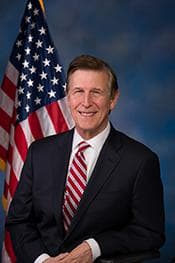
- Donald Beyer
- Cosponsors
- - 2 - 1
- Introduced
- In Committee
What this bill would do
The Human Authority over Autonomous Weapons Act of 2026 aims to amend title 10 of the United States Code. It directs the Secretary of Defense to ensure that the use of autonomous weapons systems and artificial intelligence-enabled systems by the Armed Forces is subject to human command responsibility. The bill requires the establishment of procedures to identify responsible human commanders and ensure oversight for lethal decisions. It also mandates that for a five-year period, commanders must verify targets using a secondary source not exclusively generated by artificial intelligence. Certain defense systems, such as missile defense, are excluded from these requirements.
Yes
Would veterans be better off under this, taking everything together?+1
The bill establishes human command responsibility which may contribute to more controlled and supervised combat environments for service members.
Does this increase the pay, pensions or support veterans receive?+1
The bill's focus on human oversight and target verification may reduce errors in lethal engagements involving service members.
The opposite
No question was scored the opposite.
Who it would affect, and how
Potential Positive Impacts for People
-
Human Command Responsibility: The bill requires that any use of force involving autonomous or AI-enabled systems is subject to human command responsibility, which includes identifying a specific human commander or operator responsible for authorizing, supervising, and terminating the use of force (Section 2(a)(1)).
-
Lethal Decision Oversight: The Secretary must ensure human oversight, approval, or a human-in-the-loop for any decision to use these systems for an intentionally lethal purpose (Section 2(a)(2)).
-
Target Verification: For the first five years after enactment, the bill requires a commander or operator to verify any target using a secondary source or data that is not exclusively generated by artificial intelligence (Section 2(a)(3)).
Potential Negative Impacts for People
- Potential Delays or Prevention of Force: The Secretary of Defense is required to report on the extent to which the use of force by the Armed Forces has been prevented or delayed due to the implementation of these new procedures and requirements (Section 2(b)).
Groups and Interests Ranking
Every group the model scored this bill for, from -10 to +10. Hover a score for the reason it gave.
- Demographic And Interest Groups
- Good For Veterans+1
- National Security And Foreign Policy
- Improves Veterans Benefits+1
- 7/16/2026
- Referred to the House Committee on Armed Services.
- 3 Cosponsors added.
- Introduced in House
 Tom Barrett
Republican · Michigan
 Valerie Foushee
Democrat · North Carolina
 Sara Jacobs
Democrat · California