Bill · H.R. 9716· House(119-HR-9716)
PRIVACY Act
- Introduced
- 7/15/2026
- Last activity
- 7/15/2026 — Referred to the Committee on the Judiciary, and in addition to the Committee on Oversight and Government Reform, for a period to be subsequently determined by the Speaker, in each case for consideration of such provisions as fall within the jurisdiction of the committee concerned.
- Sponsored by
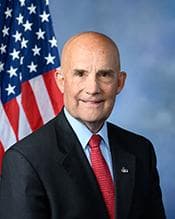
- Keith Self
- Cosponsors
- - 7 - 0
- Introduced
- In Committee
What this bill would do
The PRIVACY Act aims to stop Federal law enforcement agencies from using State or local surveillance equipment or data to get around warrant requirements. It mandates the Attorney General to create a "Jurisdictional Wall List" of specific surveillance technologies, such as automated license plate readers and cameras. Under this bill, Federal agencies must obtain a warrant from a Federal judge before accessing data from these technologies. The Act also sets strict rules on how long data can be kept and requires federal agencies to maintain detailed records of their access. Additionally, the bill prohibits the use of Federal funds to purchase specific surveillance devices listed on the Jurisdictional Wall List.
Yes· 3 of 7
Does this protect people from being watched or searched?+9
Significantly strengthens individual privacy against federal surveillance.
Does this give people more control over their personal data?+8
The bill enhances data privacy by mandating warrants and strict data retention limits.
Does this make what the government does easier for the public to see?+7
The bill mandates public summaries and congressional reports on surveillance activities.
The opposite
Does this give the government more power to monitor people inside the country?-7
The bill significantly restricts the scope and duration of domestic surveillance by federal agencies.
Does this give the federal government more power?-5
The bill limits the existing surveillance powers of federal agencies.
Who it would affect, and how
Potential Positive Impacts for People
-
Protection against warrantless surveillance: Federal law enforcement agencies would be prohibited from accessing covered surveillance data without a warrant issued by a Federal judge, which protects individuals from unauthorized access (Section 2(b)).
-
Limits on data retention: The bill prevents the government from holding onto surveillance data for more than 30 days, unless a court grants an extension or it is part of an ongoing prosecution, which limits the time people's data is stored (Section 2(c)(1)).
-
Ensuring evidence integrity: If data is obtained or kept longer than the law allows, it cannot be used as evidence in Federal court, which provides a check against improper law enforcement actions (Section 2(c)(2)(A)).
-
Protection of First Amendment rights: The law prohibits Federal agencies from using surveillance data to monitor or track people based solely on their exercise of First Amendment rights (Section 6), and requires regulations to prevent using data to identify people engaged in protected activities (Section 5(1)(C)).
-
Accountability and transparency: The Attorney General must submit semiannual reports to Congress regarding how often this data is accessed and any violations that occurred, and a summary must be made public (Section 4).
-
Right to legal recourse: Individuals can bring civil actions against the government or specific officers if their surveillance data is obtained in violation of this Act, allowing them to seek damages and attorney fees (Section 8(a)).
Potential Negative Impacts for People
-
Restrictions on data use during emergencies: While there is an exception for imminent danger of death or serious injury, Federal agencies are limited to collecting only the minimum amount of data necessary, which could impact urgent investigations (Section 2(e)(1)).
-
Limitations on Federal funding: The bill prohibits the use of Federal funds to purchase or install surveillance technologies on the Jurisdictional Wall List, which could affect the acquisition of tools like automated license plate readers (Section 3(a)).
Groups and Interests Ranking
Every group the model scored this bill for, from -10 to +10. Hover a score for the reason it gave.
- Governance And Ideology
- Improves Privacy Rights+9Improves Government Transparency+7Improves Due Process+6Improves Freedom Of Speech+5Increases Federal Power-5
- Social Issues And Justice
- Improves Policing Reform+6Improves Freedom Of Speech+5
- Education And Technology
- Improves Data Privacy+8
- National Security And Foreign Policy
- Increases Domestic Surveillance-7
- 9/15/2026
- 1 Cosponsor added.
- 9/1/2026
- 2 Cosponsors added.
- 8/31/2026
- 1 Cosponsor added.
- 8/20/2026
- 1 Cosponsor added.
- 7/15/2026
- Referred to the Committee on the Judiciary, and in addition to the Committee on Oversight and Government Reform, for a period to be subsequently determined by the Speaker, in each case for consideration of such provisions as fall within the jurisdiction of the committee concerned.
- 2 Cosponsors added.
- Introduced in House
 Eric Burlison
Republican · Missouri
 Nicholas Begich
Republican · Alaska
 Michael Cloud
Republican · Texas
 Andrew Clyde
Republican · Georgia
 Elijah Crane
Republican · Arizona
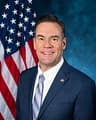 Russ Fulcher
Republican · Idaho
 Andy Harris
Republican · Maryland