Bill · H.R. 9651· House(119-HR-9651)
Space Ready 2.0 Act
- Introduced
- 7/13/2026
- Last activity
- 7/13/2026 — Referred to the House Committee on Science, Space, and Technology.
- Sponsored by
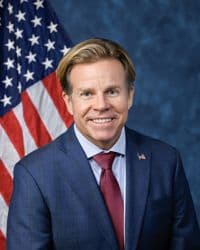
- Mike Haridopolos
- Cosponsors
- - 2 - 1
- Introduced
- In Committee
What this bill would do
The "Space Ready 2.0 Act" allows the NASA Administrator to start a pilot program for public and private investment in infrastructure at NASA Centers. This program focuses on "common use infrastructure," such as roadways and pipelines, that benefits multiple users. The Administrator can enter into agreements to collect voluntary contributions from commercial entities and other government authorities to fund repairs, maintenance, and modernization. The bill requires cost transparency, the return of unspent funds to commercial partners, and regular reports to Congress. This authority to collect voluntary contributions ends on December 31, 2031.
Yes· 3 of 11
Would business owners be better off under this?+4
Provides a clear framework for commercial entities to invest in and utilize NASA infrastructure with fund protection.
Does this put more into space exploration?+4
Directly improves the infrastructure necessary to support NASA and commercial space activities.
Would billionaires be better off under this?+3
Benefits high-net-worth individuals invested in the commercial space industry.
The opposite
No question was scored the opposite.
Who it would affect, and how
Potential Positive Impacts for People
-
Improved Infrastructure: The bill allows for the renovation, rehabilitation, and modernization of NASA-owned infrastructure, which can support activities at NASA Centers (Section 3(b)(2)(A)).
-
Financial Protection for Businesses: Commercial entities are guaranteed the return of any unexpended funds in proportion to their original contribution once a project is finished (Section 3(b)(1)(D)) or within 90 days of a project becoming operational (Section 3(b)(2)(D)).
-
Accountability and Transparency: The Administrator must establish cost and schedule baselines and provide commercial entities with a final project cost breakdown upon completion (Section 3(b)(1)(B)).
-
Efficiency in Project Delivery: The Administrator is directed to use streamlined acquisition procedures to the maximum extent allowed by law (Section 3(b)(1)(C)(ii)).
-
Prevention of Waste: The Administrator must consult with other Federal, State, and local entities to ensure projects are not duplicative (Section 3(b)(2)(B)(i)).
Potential Negative Impacts for People
-
Budgetary Constraints: No contributions can be collected or accepted, and no agreements can be executed, unless the amounts are provided in advance in an appropriations Act (Section 3(b)(1)(A)).
-
Risk of Cost Overruns: While the Administrator should try to stay within cost estimates, the bill requires agreements to simply determine which entity covers the costs if overruns or delays occur, meaning commercial entities or the government could still face unexpected costs (Section 3(b)(1)(F)(iii)).
Groups and Interests Ranking
Every group the model scored this bill for, from -10 to +10. Hover a score for the reason it gave.
- Demographic And Interest Groups
- Good For Business Owners+4Good For Billionaires+3Good For Union Workers+1
- Economy And Finance
- Improves Economic Growth+2Increases Job Creation+2Improves Fiscal Responsibility+1Reduces Government Spending+1
- Education And Technology
- Increases Space Exploration+4Increases Scientific Research Funding+2
- Environment Energy And Infrastructure
- Improves Roads And Bridges+3
- Governance And Ideology
- Improves Government Transparency+2
- 10/5/2026
- 3 Cosponsors added.
- 7/13/2026
- Referred to the House Committee on Science, Space, and Technology.
- Introduced in House
One bill Congress.gov lists as related to this one — companions in the other chamber, earlier versions, and bills this one absorbed or was folded into.
 Vince Fong
Republican · California
 Jay Obernolte
Republican · California
 George Whitesides
Democrat · California