Bill · H.R. 9628· House(119-HR-9628)
TEACH Improvement Act of 2026
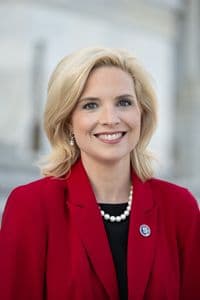
- Introduced
- 7/15/2026
- Last activity
- 7/9/2026 — Referred to the House Committee on Education and Workforce.
- Sponsored by
- Ashley Hinson
- Cosponsors
- - 0 - 1
- Introduced
- In Committee
What this bill would do
The TEACH Improvement Act of 2026 seeks to amend the Higher Education Act of 1965 regarding the use of TEACH Grants. The bill establishes new definitions for eligible institutions, post-baccalaureate programs, and teacher candidates. It outlines specific grant amounts for undergraduate, post-baccalaureate, and graduate students. The legislation also creates strict institutional eligibility requirements based on how many grants are converted into loans due to failed service obligations. Finally, it mandates various reporting requirements and oversight for student loan servicers.
Yes· 3 of 7
Does this make college cost less?+7
The bill establishes specific grant amounts for undergraduate, post-baccalaureate, and graduate students to cover educational costs.
Would students be better off under this?+6
The bill provides specific grant amounts and expands the use of funds to include remedial courses and study abroad.
Would people in their twenties and thirties be better off under this?+5
The bill provides financial assistance for undergraduate and graduate education, which primarily benefits young adults.
The opposite
No question was scored the opposite.
Who it would affect, and how
Potential Positive Impacts for People
-
Financial Support for Teacher Candidates: The bill provides specific grant amounts to help pay for education, such as $4,000 for the first two years and $5,000 for the second two years for certain applicants, or $5,000 per year for others (Section 420M(a)(1)).
-
Flexible Funding Use: Grants can be used for any component of the cost of attendance at an eligible institution, as selected by the teacher candidate (Section 420M(b)(3)).
-
Inclusion of Necessary Preparatory Courses: The bill allows for the inclusion of noncredit or remedial courses, including English language acquisition, to help prepare candidates for their degree or certificate (Section 420M(d)(3)).
-
Support for Study Abroad: Students can use their grants for programs of study abroad that are approved for credit by their home institution (Section 420M(d)(3)).
-
Recourse for Errors: Recipients may request a reconsideration if their grant is converted to a loan due to errors, processing delays, or other valid reasons, which can result in the reinstatement of the grant and the removal of negative credit reporting (Section 420N(c)(2)).
-
Flexibility for Changing Fields: Recipients can still fulfill their service obligations even if the field or school they intended to teach in is no longer designated as high-need (Section 420N(d)(1)).
Potential Negative Impacts for People
-
Reduced Grants for Part-Time Students: If a teacher candidate attends an institution on less than a full-time basis, the grant amount will be reduced proportionally (Section 420M(c)(1)).
-
Risk of Loan Conversion: If a recipient fails or refuses to complete the required service obligation, the grant is converted into a Federal Direct Stafford Loan (Section 420N(b)(2)).
-
Institutional Restrictions: Schools that have high rates of grant-to-loan conversions may face penalties, such as being ineligible to offer grants to new students or being required to provide additional counseling and task forces (Section 420M(e)(1) and (e)(2)).
-
Strict Service Requirements: To keep the grant, applicants must agree to serve as a full-time teacher for at least 4 academic years within an 8-year window in specific high-need fields or schools (Section 420N(b)(1)).
Groups and Interests Ranking
Every group the model scored this bill for, from -10 to +10. Hover a score for the reason it gave.
- Demographic And Interest Groups
- Good For Students+6Good For Young Adults+5Good For Low Income Households+4
- Education And Technology
- Improves College Affordability+7
- Governance And Ideology
- Improves Government Transparency+3
- Economy And Finance
- Increases Job Creation+2
- Social Issues And Justice
- Improves Poverty Reduction+1
- 7/9/2026
- Referred to the House Committee on Education and Workforce.
- 1 Cosponsor added.
- Introduced in House
One bill Congress.gov lists as related to this one — companions in the other chamber, earlier versions, and bills this one absorbed or was folded into.
 Alma Adams
Democrat · North Carolina