Bill · H.R. 9599· House(119-HR-9599)
SECURE 340B Act

- Introduced
- 7/6/2026
- Last activity
- 7/6/2026 — Referred to the Committee on Energy and Commerce, and in addition to the Committees on Ways and Means, and Education and Workforce, for a period to be subsequently determined by the Speaker, in each case for consideration of such provisions as fall within the jurisdiction of the committee concerned.
- Sponsored by
- Scott Peters
- Cosponsors
- - 4 - 4
- Introduced
- In Committee
What this bill would do
The "SECURE 340B Act" aims to strengthen the 340B drug discount program through increased oversight and transparency. It introduces clearer definitions for patients and specific requirements for prescribing providers and non-hospital entities. The legislation implements stricter standards for contract pharmacies, child sites, and subgrantees to ensure program integrity. It enhances patient affordability by mandizing financial assistance policies, sliding fee scales, and medical debt protections. Additionally, the bill mandates various studies by the Secretary and the Comptroller General regarding dispensing fees, discount retention, and hospital debt collection practices. Finally, it establishes a data clearinghouse and provides resources for increased auditing and enforcement.
Yes· 3 of 10
Would households on low incomes be better off under this?+8
The bill provides direct benefits through sliding fee scales, financial assistance, and medical debt protections.
Does this lower the price of prescription medicines?+7
The bill strengthens the 340B program to ensure discounted drugs are more accessible and affordable for patients.
Does this make health care easier to get in general?+6
Enhanced oversight and financial assistance policies aim to improve healthcare access for underserved populations.
The opposite
Would business owners be better off under this?-3
Covered entities face increased administrative burdens and potential loss of program eligibility.
Who it would affect, and how
Potential Positive Impacts for People
-
Clearer Patient Definition: Establishing specific criteria for who qualifies as a "patient" clarifies the relationship between covered entities and those receiving care (Section 2).
-
Increased Affordability via Financial Assistance: Covered entities must maintain and extend financial assistance policies to patients at their child sites and contract pharmacies (Section 5).
-
Sliding Fee Scales: Certain covered entities are required to use sliding fee scales for covered outpatient drugs to assist patients (Section 5).
-
Medical Debt Protections: The bill prohibits certain covered entities from selling patient debt to third parties, reporting adverse information to credit bureaus, or denying medically necessary care due to non-payment (Section 5).
-
Expanded Access through Referrals: Certain entities, such as critical access hospitals, can provide discounted drugs to patients referred by the covered entity (Section 2).
-
Transparency in Pharmacy Arrangements: The Secretary is required to make information regarding contract pharmacy arrangements available on a public website (Section 3).
-
Increased Transparency of Pharmacy Fees: The Secretary will study dispensing fees and reimbursements paid to pharmacies to determine if they are reasonable (Section (a)(1)).
-
Improved Oversight of the 340B Discount: The Comptroller General will study how the 340B discount is retained by various entities, including contract pharmacies, health plans, and patients (Section (b)(1)).
-
Scrutiny of Hospital Debt Collection: The Comptroller General will report on the debt collection practices of hospitals, including those in the 340B program (Section (c)).
-
Enhanced Monitoring of Care for Low-Income Populations: The Comptroller0 General will analyze contracts between local governments and certain non-profit hospitals to assess care provided to individuals at or below 400 percent of the Federal Poverty Level (Section (d)(1)(B)).
-
Protection of Underserved Populations: The bill requires an analysis of how violations impact the ability of Federally Qualified Health Centers to provide affordable care to underserved populations (Section (d)(1)(E)).
Potential Negative Impacts for People
-
Increased Administrative Burden for Entities: Covered entities must maintain extensive auditable health care records and undergo regular audits (Section 2).
-
Strict Eligibility Requirements for Child Sites: To participate, child sites must meet rigorous integration, ownership, and community need standards (Section 4).
-
New Costs for Covered Entities: A user fee program is established where entities pay a fee based on their previous year's drug purchases (Section 10).
-
Potential Loss of Discount Eligibility: Entities may lose eligibility for the drug discount program if they fail to comply with required corrective action plans (Section 2).
-
Mandatory Data Transmission: Entities are required to participate in a new data transmission process through a third-party clearinghouse (Section 8).
-
Increased Administrative Burden for Non-Hospital Entities: Non-hospital covered entities and subgrantees face strict new requirements, including enforceable written agreements, specific record-keeping, and registration in a central system (Section 13(i)).
-
Strict Participation Limitations: Participation for certain entities is tied to specific conditions, such as being a nonprofit or public entity and ensuring services are within the scope of Federal grants (Section 13(i)(I)).
-
Potential Loss of Program Access: Subgrantees may need to disenroll from the program if they no longer meet specific requirements, such as demographic thresholds related to State Medicaid enrollment (Section 13(ii)(III) and (V)).
Groups and Interests Ranking
Every group the model scored this bill for, from -10 to +10. Hover a score for the reason it gave.
- Demographic And Interest Groups
- Good For Low Income Households+8Good For Retirees+4Good For Seniors+4Good For Business Owners-3
- Healthcare
- Reduces Prescription Drug Costs+7Improves Healthcare Access+6
- Governance And Ideology
- Improves Government Transparency+6Increases Federal Power+5
- Economy And Finance
- Improves Consumer Protection+5
- Social Issues And Justice
- Improves Poverty Reduction+5
- Education And Technology
- Improves Data Privacy+4
- 10/5/2026
- 1 Cosponsor added.
- 9/17/2026
- 2 Cosponsors added.
- 8/31/2026
- 1 Cosponsor added.
- 7/6/2026
- Referred to the Committee on Energy and Commerce, and in addition to the Committees on Ways and Means, and Education and Workforce, for a period to be subsequently determined by the Speaker, in each case for consideration of such provisions as fall within the jurisdiction of the committee concerned.
- 4 Cosponsors added.
- Introduced in House
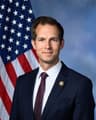 Jake Auchincloss
Democrat · Massachusetts
 Nanette Barragán
Democrat · California
 Dan Crenshaw
Republican · Texas
 Neal Dunn
Republican · Florida
 Vicente Gonzalez
Democrat · Texas
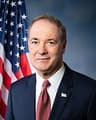 John Joyce
Republican · Pennsylvania
 Carol Miller
Republican · West Virginia
 Kevin Mullin
Democrat · California