Bill · H.R. 9578· House(119-HR-9578)
Spot the Fakes Act
- Introduced
- 7/2/2026
- Last activity
- 7/2/2026 — Referred to the House Committee on Energy and Commerce.
- Sponsored by
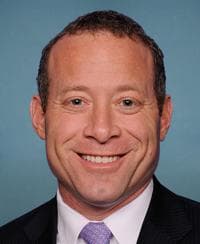
- Josh Gottheimer
- Cosponsors
- - 2 - 2
- Introduced
- In Committee
What this bill would do
The Spot the Fakes Act requires people who own or control AI-generated content to label it as AI-generated. This labeling must happen within the metadata of the output or through other technological means that provide verifiable proof of origin. The Director of the National Institute of Standards and Technology will help determine appropriate verification methods. The Federal Trade Commission, working with the Director of the National Institute of Standards and Technology, must issue regulations on how these labels are shown within six months of the enactment of the section. The Federal Trade Commission is responsible for enforcing these rules. Violating this requirement will be treated as an unfair or deceptive act or practice under the Federal Trade Commission Act.
Yes· 3 of 11
Does this give people more protection from unfair business practices?+7
The bill protects consumers from deceptive practices by requiring labels on AI-generated content.
Does this put more rules on large technology companies?+5
The bill imposes new regulatory requirements on those who control AI-generated content.
Does this make what the government does easier for the public to see?+4
The bill increases transparency regarding the origin of digital media through mandatory labeling.
The opposite
Would business owners be better off under this?-4
The bill imposes new regulatory compliance burdens and potential legal risks for those producing AI content.
Who it would affect, and how
Potential Positive Impacts for People
- Transparency for Consumers: Under Section 2(a), anyone who owns or controls AI-generated content must label it as AI-generated using metadata or other technological means. This is a positive step because it helps people easily know when they are looking at or listening to content created by artificial intelligence instead of a real person.
Potential Negative Impacts for People
- Risk of Penalties for Violations: Under Section 2(c), anyone who breaks the labeling rules will face enforcement actions from the Federal Trade Commission, as violations are treated as unfair or deceptive acts or practices. This could be a burden for individuals or groups who accidentally fail to label their AI content properly and now face federal penalties.
Groups and Interests Ranking
Every group the model scored this bill for, from -10 to +10. Hover a score for the reason it gave.
- Demographic And Interest Groups
- Good For High Income Households+3Good For Low Income Households+3Good For Middle Class Households+3Good For Billionaires+2Good For High Net Worth Individuals+2Good For Ultra High Net Worth Individuals+2Good For Urban Residents+2Good For Business Owners-4
- Economy And Finance
- Improves Consumer Protection+7
- Governance And Ideology
- Improves Government Transparency+4Improves Privacy Rights+2
- Education And Technology
- Increases Big Tech Regulation+5
- 9/21/2026
- 1 Cosponsor added.
- 7/13/2026
- 1 Cosponsor added.
- 7/2/2026
- Referred to the House Committee on Energy and Commerce.
- 2 Cosponsors added.
- Introduced in House
 Brian Fitzpatrick
Republican · Pennsylvania
 Val Hoyle
Democrat · Oregon
 Thomas Kean
Republican · New Jersey
 Sam Liccardo
Democrat · California