Bill · H.R. 9536· House(119-HR-9536)
FEES Act of 2026
- Introduced
- 6/30/2026
- Last activity
- 6/30/2026 — Referred to the House Committee on the Judiciary.
- Sponsored by
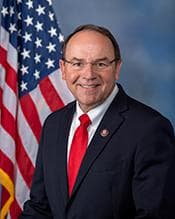
- Thomas Tiffany
- Cosponsors
- - 2 - 0
- Introduced
- In Committee
What this bill would do
The FEES Act of 2026 proposes amendments to title 5 and title 28 of the United States Code regarding the payment of attorney's fees. It seeks to restrict which parties are eligible to receive fee awards in agency proceedings and civil actions by requiring a direct and personal monetary interest. The bill also implements caps on the amount of fees and the number of actions for which fees can be awarded unless specific conditions are met. Additionally, it prohibits settlement agreements or consent decrees involving federal agencies from including attorney's fees or litigation costs. Finally, the Act mandates an independent scientific assessment of these provisions' impacts on federally managed lands.
Yes· 3 of 5
Does this reduce what the federal government spends?+5
The bill reduces government spending by capping and restricting the payment of attorney's fees in agency proceedings and civil actions.
Does this make the government pay for what it commits to?+3
By limiting predictable legal expenditures through fee caps, the bill aims to increase fiscal control over litigation costs.
Does this better protect public land such as parks and forests?+2
The bill mandates a scientific assessment to monitor the impact of these legal changes on the sustainability of federal lands.
The opposite· 3 of 6
Would households on low incomes be better off under this?-5
Narrowing eligibility for attorney's fees may make it harder for low-income individuals to challenge government actions.
Does this protect the right to fair treatment by the courts?-4
The bill restricts the ability of parties to recover costs, which may impact the practical exercise of due process in agency actions.
Does this better protect air, water and wildlife?-4
By limiting legal fee awards, the bill may discourage environmental advocacy and litigation used to enforce protections.
Who it would affect, and how
Potential Positive Impacts for People
-
Limitation on Fee Awards: Under Section 2(a)(2) and Section 2(b)(3)(E), the bill limits fee awards to $200,000 per single action or more than three actions in a calendar year, unless it is a class action or involves the Social Security Administration or Department of Veterans Affairs. This could serve to limit what the text calls "egregiously expensive suits."
-
Restrictions on Settlements: Section 3(a) prevents settlement agreements or consent decrees that involve a regulation or guidance document from including the payment of attorneys' fees or litigation costs.
-
Scientific Assessment of Lands: Section 4(a) requires the Secretary of Interior to assemble an independent scientific panel to assess how the Act's provisions impact the ecological, social, and economic sustainability of federally managed lands, covering factors like forest health and biological diversity.
Potential Negative Impacts for People
-
Narrowing Eligibility for Fees: Section 2(a)(1) and Section 2(b)(1)(A) amend the law so that only parties with a "direct and personal monetary interest" (such as personal injury, private property damage, or unpaid agency disbursement) can be considered prevailing parties for fee awards.
-
Mandatory Fee Reductions: Section 2(b)(2)(A) changes the law so that a court "shall" reduce fee awards or deny them based on pro bono hours and related expenses, or if a party acted in an "obdurate, dilatory, mendacious, or oppressive manner, or in bad faith."
-
Restrictions on Settlement Terms: Section 3(a) mandates that settlement agreements or consent decrees resulting in a regulation or guidance document may not include the payment of attorneys' fees or litigation costs.
Groups and Interests Ranking
Every group the model scored this bill for, from -10 to +10. Hover a score for the reason it gave.
- Governance And Ideology
- Improves Due Process-4Improves Government Transparency-2Increases Federal Power-2
- Economy And Finance
- Reduces Government Spending+5Improves Fiscal Responsibility+3Improves Consumer Protection-3
- Environment Energy And Infrastructure
- Improves Public Land Management+2Improves Environmental Protections-4
- Demographic And Interest Groups
- Good For Business Owners+2Good For Veterans+2Good For Low Income Households-5
- 9/2/2026
- 1 Cosponsor added.
- 6/30/2026
- Referred to the House Committee on the Judiciary.
- 1 Cosponsor added.
- Introduced in House
 Vince Fong
Republican · California
 Harriet Hageman
Republican · Wyoming