Bill · H.R. 9519· House(119-HR-9519)
Social Security 2100 Act
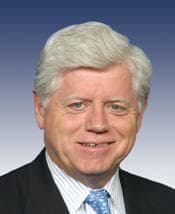
- Introduced
- 6/29/2026
- Last activity
- 6/29/2026 — Referred to the Committee on Ways and Means, and in addition to the Committees on Education and Workforce, and Energy and Commerce, for a period to be subsequently determined by the Speaker, in each case for consideration of such provisions as fall within the jurisdiction of the committee concerned.
- Sponsored by
- John Larson
- Cosponsors
- - 4 - 0
- Introduced
- In Committee
What this bill would do
The Social Security 2100 Act aims to protect the Social Security system and improve benefits for current and future generations through several benefit increases and cost-of-living adjustments. It seeks to strengthen the Social Security Trust Fund by repealing limitations on the wage base and applying taxes to net investment income. The legislation includes provisions for caregiver credits, extended education benefits, and adjustments to disability benefit waiting periods. It also implements changes regarding accountability, such as prohibiting the wrongful invalidation of account numbers and limiting how overpayments are recovered. Additionally, the bill outlines improvements to service delivery, data protection, and communication standards.
Yes· 3 of 26
Would people over 65 be better off under this?+10
Increases benefits, improves COLA accuracy, and protects access to services and stable payments.
Would retired people be better off under this?+10
Directly increases benefit amounts, improves COLA, and protects sensitive data.
Does this strengthen Social Security?+10
Expands benefits, improves COLA accuracy, enhances data privacy, and secures long-term funding.
The opposite· 3 of 10
Would the very wealthiest people be better off under this?-10
Strongly negative impact due to new investment income taxes and removal of wage caps.
Would billionaires be better off under this?-10
Strongly negative impact due to new investment income taxes and removal of wage caps.
Would people with substantial wealth be better off under this?-9
Significant negative impact due to the 12.4% tax on net investment income.
Who it would affect, and how
Potential Positive Impacts for People
-
Benefit Increases: The bill provides an across-the-board benefit increase of 3 percent for the years 2027 through 2036 (Section 101).
-
Improved Cost-of-Living Adjustments: It updates cost-of-living adjustments to use either the Consumer Price Index for Urban Wage Earners and Clerical Workers or the Consumer Price Index for Elderly Consumers, depending on which is higher (Section 102).
-
Support for Low Earners: The bill increases the minimum benefit for long-term low earners based on their years of work and the poverty guideline (Section 103).
-
Tax Relief for Benefits: It increases the threshold amounts for including Social Security benefits in income (Section 104).
-
Improved Widow/Widower Benefits: The bill improves benefits for widows and widowers in two-income households (Section 105).
-
Long-term Eligibility Bonuses: It increases benefits for individuals who have been eligible for 15 or more years (Section 106).
-
Caregiver Recognition: The act provides caregiver credits for those providing care to dependent relatives (Section 107).
-
Faster Disability Access: It eliminates the 5-month waiting period for disability benefits (Section 108).
-
Extended Education Benefits: The bill extends child's benefits for post-secondary school students up to the age of 26 (Section 110).
-
Relative Support: It increases access to benefits for children living with grandparents or other relatives (Section 111).
-
Data Privacy and Recourse: It protects Social Security data and provides for civil damages if an individual's information is negligently accessed or disclosed (Section 303).
-
Service Accessibility: The bill includes a moratorium on closing or consolidating Social Security field and hearing offices (Section 302).
-
Protection of Social Security Numbers: The bill prohibits the invalidation of account numbers without sufficient evidence, such as death or fraud, or for correcting clerical errors (Section 304(a)(1)). This protects individuals from having their accounts improperly flagged or suspended.
-
Ability to Seek Damages: If an individual's Social Security number is wrongfully invalidated and they suffer harm, they can bring a civil action for damages and injunctive relief (Section 304(a)(3)(A)). This provides a legal path for accountability.
-
Financial Relief During Overpayment Recoveries: When the Commissioner recovers an overpayment that was not due to fraud, they cannot decrease monthly benefits by more than 10 percent unless the individual requests a higher rate (Section 305(a)). This prevents sudden, large reductions in monthly income.
-
Clearer Communication Standards: Social Security account statements will be provided by mail by default, ensuring people receive physical copies unless they specifically choose electronic delivery (Section 307(a)).
-
Updated Professional Representation Rates: The bill adjusts the dollar amounts for agreements related to professional representation by linking them to a calculation involving the national average wage index (Section 308(a)).
Potential Negative Impacts for People
-
Tax Changes for High Earners: The bill applies a 12.4 percent Social Security tax to net investment income for those exceeding certain thresholds (Section 203).
-
Impact on High Earners: The bill repeals the limitation on the Social Security wage base, meaning higher earnings will be subject to taxation (Section s 201).
-
Legal Costs for Litigation: While individuals can sue for damages regarding invalidated account numbers, they must navigate a legal process that may involve costs, even though reasonable attorneys fees can be awarded (Section 304(a)(3)(B)).
-
Stringent Terms for Overpayment Recovery: While the 10 percent cap protects monthly income, the law still allows for the recovery of overpayments from individuals (Section 305(a)).
Groups and Interests Ranking
Every group the model scored this bill for, from -10 to +10. Hover a score for the reason it gave.
- Demographic And Interest Groups
- Good For Retirees+10Good For Seniors+10Good For Low Income Households+9Good For People With Disabilities+8Good For Children+7Good For Students+7Good For Women+7Good For Middle Class Households+6Good For Young Adults+6Good For Rural Residents+5Good For African Americans+4Good For Hispanic Americans+4Good For Native Americans+4Good For Billionaires-10Good For Ultra High Net Worth Individuals-10Good For High Net Worth Individuals-9Good For High Income Households-8Good For Business Owners-5Good For Farmers-3
- Social Issues And Justice
- Improves Social Security+10Improves Disability Rights+8Improves Poverty Reduction+8Improves Childcare Affordability+5Improves Gender Equality+4
- Governance And Ideology
- Improves Privacy Rights+9Improves Due Process+7Improves Government Transparency+5
- Education And Technology
- Improves Data Privacy+9Improves College Affordability+4
- Economy And Finance
- Increases Wealthy Taxes+9Improves Fiscal Responsibility+6Reduces Middle Class Taxes+3Reduces Capital Gains Tax-7Reduces Government Spending-5Reduces Small Business Taxes-4Improves Small Business Support-3
- 10/5/2026
- 1 Cosponsor added.
- 9/16/2026
- 1 Cosponsor added.
- 8/31/2026
- 2 Cosponsors added.
- 6/29/2026
- Referred to the Committee on Ways and Means, and in addition to the Committees on Education and Workforce, and Energy and Commerce, for a period to be subsequently determined by the Speaker, in each case for consideration of such provisions as fall within the jurisdiction of the committee concerned.
- Introduced in House
9 bills Congress.gov lists as related to this one — companions in the other chamber, earlier versions, and bills this one absorbed or was folded into.
- 119-HR-1876: Keeping Our Field Offices Open Act
- 119-HR-1877: Protecting Americans’ Social Security Data Act
- 119-HR-2999: To amend title II of the Social Security Act to provide that not more than 10 percent of a monthly benefit may be withheld on account of overpayments.
- 119-HR-5841: Boosting Benefits and COLAs for Seniors Act
- 119-HR-10235: Protecting Our Widows and Widowers in Retirement Act
- 119-S-3059: Boosting Benefits and COLAs for Seniors Act
- 119-S-5042: Social Security 2100 Act
- 118-HR-4583 (not yet synced)
- 118-S-2280 (not yet synced)
 Joe Courtney
Democrat · Connecticut
 Suzan DelBene
Democrat · Washington
 Jahana Hayes
Democrat · Connecticut
 Timothy Kennedy
Democrat · New York