Bill · H.R. 938· House(119-HR-938)
No Contracts with Foreign Adversaries Act
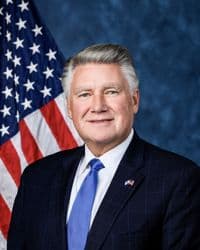
- Introduced
- 2/4/2025
- Last activity
- 2/4/2025 — Referred to the House Committee on Education and Workforce.
- Sponsored by
- Mark Harris
- Cosponsors
- - 1 - 0
- Introduced
- In Committee
What this bill would do
The "No Contracts with Foreign Adversaries Act" seeks to amend the Higher Education Act of 1965. It prohibits institutions of higher education from entering into contracts with foreign countries of concern or foreign entities of concern. Institutions may request a waiver from the Secretary, which is limited to a one-year period and must be tied to specific terms. To receive a waiver, the Secretary must consult with several high-level government officials and determine the contract benefits the institution's mission and promotes U.S. security and stability. The bill also establishes strict enforcement measures, including civil actions and significant fines for non-compliance.
Yes· 3 of 5
Defense And Security+5
The bill restricts higher education institutions from entering contracts with foreign countries or entities of concern to protect national security.
Does this make what the government does easier for the public to see?+2
The bill requires the Secretary to notify Congressional committees of the intent to issue contract waivers.
Is this likely to grow the economy?+1
The bill requires that contracts promote the economic vitality of the United States.
The opposite
Does this make college cost less?-2
The bill creates new administrative burdens and significant financial risks for higher education institutions.
Would high-income households be better off under this?-1
Higher education institutions may face financial instability due to potential fines and loss of federal program eligibility.
Who it would affect, and how
Potential Positive Impacts for People
-
National Security and Stability: The bill requires that any waived contract must promote the "security, stability, and economic vitality of the United States" (Section 2(a)(2)(A)(ii)(bb)).
-
Student and Institutional Benefits: The Secretary can only issue a waiver if the contract is determined to be "for the benefit of the institution's mission and students" (Section 2(a)(2)(B)(iii)(i)).
-
Increased Oversight: The bill mandates a high level of government consultation, involving the Director of the FBI, the Director of National Intelligence, the Secretary of State, and several other officials to ensure contracts are vetted (Section 2(a)(2)(B)(iii)(2)).
Potential Negative Impacts for People
-
Financial Penalties for Institutions: Institutions that knowingly or willfully fail to comply may be forced to pay the full costs of investigation and enforcement, plus significant fines ranging from 5% to 20% of their total Federal funds (Section 2(a)(f)(3) and (4)).
-
Risk to Program Participation: An institution that violates these requirements for three consecutive fiscal years could be made ineligible to participate in programs authorized by the Higher Education Act for at least two years (Section 2(b)(3)(A)(i)).
-
Contract Termination Burdens: If a previously non-concerning entity is designated as a foreign country or entity of concern, institutions are required to terminate existing contracts within 60 days (Section 2(a)(c)).
-
Administrative Requirements: Institutions must designate and maintain a compliance officer to personally certify the accuracy of waiver requirements (Section 2(a)(e)).
Groups and Interests Ranking
Every group the model scored this bill for, from -10 to +10. Hover a score for the reason it gave.
- National Security And Foreign Policy
- Defense And Security+5
- Economy And Finance
- Improves Economic Growth+1Improves Fiscal Responsibility+1
- Education And Technology
- Improves College Affordability-2
- Governance And Ideology
- Improves Government Transparency+2
- Demographic And Interest Groups
- Good For Students+1Good For High Income Households-1
- 2/4/2025
- Referred to the House Committee on Education and Workforce.
- 1 Cosponsor added.
- Introduced in House
One bill Congress.gov lists as related to this one — companions in the other chamber, earlier versions, and bills this one absorbed or was folded into.
 Burgess Owens
Republican · Utah