Bill · H.R. 9371· House(119-HR-9371)
SLASH Prices Act
- Introduced
- 6/18/2026
- Last activity
- 6/23/2026 — Sponsor introductory remarks on measure. (CR H4134)
- Sponsored by
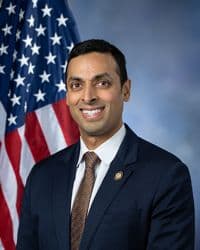
- Suhas Subramanyam
- Cosponsors
- - 3 - 0
- Introduced
What this bill would do
The SLASH Prices Act requires businesses to disclose when they use personalized algorithmic pricing to charge different prices for the same goods or services. Under this bill, businesses must provide a written notice stating that the price was set by an algorithm using personal data. Consumers must be given a way to opt-out of this pricing and must be told what their price will be once they do so. Businesses are prohibited from discriminating against those who choose to opt-out. The Federal Trade Commission is tasked with enforcing these rules and receiving notifications regarding the use of such pricing.
Yes· 3 of 7
Does this give people more protection from unfair business practices?+7
The bill requires businesses to disclose the use of personalized algorithmic pricing and provides an opt-out mechanism to protect consumers from price discrimination.
Does this make what the government does easier for the public to see?+6
The bill mandates prominent written disclosure of algorithmic pricing practices to increase transparency for consumers.
Does this give people more control over their personal data?+5
The bill increases consumer control over how their personal data is used to determine the prices they are charged for goods and services.
The opposite
No question was scored the opposite.
Who it would affect, and how
Potential Positive Impacts for People
-
Price Transparency: Businesses must include a written notice in the same place as the offered price stating, "This price was set by an algorithm using your personal data," which provides clarity to the consumer (Section 2(a)(1)).
-
Consumer Control: The bill requires a mechanism for consumers to opt-out of personalized algorithmic pricing, allowing individuals to choose how they are charged (Section 2(a)(2)).
-
Protection Against Retaliation: A covered person is prohibited from discriminating against a consumer who requests to opt-out, such as by marking up rates or denying goods and services (Section 2(a)(2)).
-
Accountability and Enforcement: The Federal Trade Commission is empowered to enforce these rules, and State attorneys general may bring civil actions to obtain damages or compensation for residents (Section 2(d) and Section 2(e)).
Potential Negative Impacts for People
-
Exclusions for Certain Industries: The requirements for disclosure and opt-outs do not apply to products or services relating to insurance or credit (Section 2(b)(1)).
-
Exclusions for Group Discounts: The rules do not apply to discount programs offered to specific groups such as teachers, service members, senior citizens, students, and veterans (Section 2(b)(3)).
-
Exclusions for Market-Based Pricing: The act does not apply to dynamic pricing that does not use personal data, nor does it apply to price differences based on delivery distance or time (Section 2(b)(2) and Section 2(b)(6)).
Groups and Interests Ranking
Every group the model scored this bill for, from -10 to +10. Hover a score for the reason it gave.
- Demographic And Interest Groups
- Good For Low Income Households+4Good For Seniors+2Good For Students+2Good For Veterans+2
- Economy And Finance
- Improves Consumer Protection+7
- Governance And Ideology
- Improves Government Transparency+6
- Education And Technology
- Improves Data Privacy+5
- 7/9/2026
- 1 Cosponsor added.
- 6/30/2026
- 1 Cosponsor added.
- 6/23/2026
- Sponsor introductory remarks on measure. (CR H4134)
- 6/18/2026
- Referred to the House Committee on Energy and Commerce.
- 1 Cosponsor added.
- Introduced in House
 Maxwell Frost
Democrat · Florida
 Maggie Goodlander
Democrat · New Hampshire
 Seth Moulton
Democrat · Massachusetts