Bill · H.R. 9367· House(119-HR-9367)
Stop Lawmakers From Predicting Act
- Introduced
- 6/18/2026
- Last activity
- 6/24/2026 — Ordered to be Reported (Amended) by the Yeas and Nays: 5 - 4.
- Sponsored by
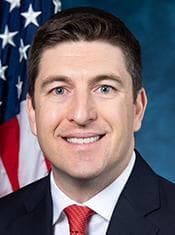
- Bryan Steil
- Cosponsors
- - 8 - 0
- Introduced
What this bill would do
The ``Stop Lawmakers From Predicting Act'' aims to amend title 5 of the United States Code to restrict trading on prediction markets. It prohibits Members of Congress, their spouses, and their dependent children from entering into transactions based on government policies, actions, or political outcomes. This restriction applies even if the event was learned through congressional service but is unrelated to specific duties. To ensure compliance, the bill establishes a system of penalties and fees for violations. These penalties are to be paid by the Member of Congress who caused the violation or the spouse/parent of the individual involved.
Yes
Does this make what the government does easier for the public to see?+6
The bill aims to prevent corruption by restricting Members of Congress from trading on non-public political outcomes.
Does this give people more protection from unfair business practices?+3
The bill increases transparency and prevents lawmakers from profiting from information asymmetries in prediction markets.
The opposite
Would high-income households be better off under this?-2
Members of Congress and their families face new financial penalties for prohibited trading activities.
Who it would affect, and how
Potential Positive Impacts for People
-
Restrictions on trading on prediction markets (Sec. 2, subsection a): This provision prevents covered individuals from profiting from transactions dependent on specific government policies, government actions, or political outcomes.
-
Enforcement through penalties (Sec. 2, subsection a, Sec. 13153): The bill establishes financial penalties, including a fee of $2,000 or ten percent of the transaction value plus any net gain, to hold covered individuals accountable for violations.
-
Payment restrictions (Sec. 2, subsection a, Sec. 13153, subsection c): By prohibiting the use of Members' Representational Allowances, Senators' official accounts, or campaign contributions to pay penalties, the bill ensures that these fines are paid from other sources.
Potential Negative Impacts for People
-
Financial penalties for covered individuals (Sec. 2, subsection a, Sec. 13153, subsection a): Members of Congress, their spouses, or parents may be required to pay fees if a covered individual violates the trading restrictions.
-
Penalties for former Members (Sec. 2, subsection a, Sec. 13153, subsection e): If a Member resigns or retires before paying a required fee, the supervising ethics office has the authority to refer them to the Department of Justice.
Groups and Interests Ranking
Every group the model scored this bill for, from -10 to +10. Hover a score for the reason it gave.
- Governance And Ideology
- Improves Government Transparency+6
- Economy And Finance
- Improves Consumer Protection+3
- Demographic And Interest Groups
- Good For High Income Households-2
- 7/2/2026
- 1 Cosponsor added.
- 6/29/2026
- 1 Cosponsor added.
- 6/24/2026
- Committee Consideration and Mark-up Session Held
- Ordered to be Reported (Amended) by the Yeas and Nays: 5 - 4.
- 1 Cosponsor added.
- 6/22/2026
- 1 Cosponsor added.
- 6/18/2026
- Referred to the House Committee on House Administration.
- 4 Cosponsors added.
- Introduced in House
 Mike Carey
Republican · Ohio
 H. Griffith
Republican · Virginia
 James Gallagher
Republican · California
 Ashley Hinson
Republican · Iowa
 Abraham Hamadeh
Republican · Arizona
 Laurel Lee
Republican · Florida
 Gregory Murphy
Republican · North Carolina
 Mary Miller
Republican · Illinois