Bill · H.R. 9338· House(119-HR-9338)
Pipeline Safety Authorization Act of 2026
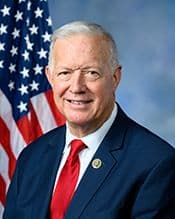
- Introduced
- 6/18/2026
- Last activity
- 7/21/2026 — Ordered to be Reported in the Nature of a Substitute by the Yeas and Nays: 41 - 8.
- Sponsored by
- Randy Weber
- Cosponsors
- None
- Introduced
What this bill would do
H.R. 9338, titled the Pipeline Safety Authorization Act of 2026, amends title 49 of the United States Code to improve the overall safety of pipeline transportation. The bill sets funding levels for gas and hazardous liquid pipeline safety programs through fiscal years 2027 through 2031. It requires minimum safety standards to explicitly consider safety and economic benefits within the United States. The legislation creates a confidential voluntary information-sharing system for pipeline safety data and sets new rules for state excavation damage prevention programs. Finally, the bill increases maximum civil penalties for pipeline safety violations.
Yes· 3 of 25
Does this protect the right to fair treatment by the courts?+3
Provides an opportunity for formal hearings when compliance costs or penalties exceed $125,000.
Would farmers be better off under this?+2
Excavation damage prevention and locatable facility requirements are highly beneficial for agricultural land use.
Would people in cities be better off under this?+2
Stricter safety and excavation protocols protect high-density populated areas.
The opposite
Would business owners be better off under this?-2
Increases civil penalties and adds compliance costs for pipeline operators.
Does this leave more decisions to the states?-1
Requires states to adopt specific leading practices to be considered effective.
Who it would affect, and how
Potential Positive Impacts for People
-
Section 4: This section gives respondents an opportunity for a formal hearing in enforcement matters where the cost of compliance or the proposed civil penalty is $125,000 or more. This is positive because it gives people and companies a fair and transparent chance to defend themselves against expensive government actions.
-
Section 8: This section establishes a confidential voluntary information-sharing system to gather pipeline safety data and share lessons learned across the industry. This is positive because it allows experts to collaborate on safety risks without fear of litigation, which helps prevent future accidents and protects communities.
-
Section 9: This section requires states to adopt leading practices for one-call notification programs and excavation damage prevention. This is positive because it helps stop construction and digging accidents from damaging underground utility lines, keeping neighborhoods safer.
Potential Negative Impacts for People
-
Section 6: This section expands criminal penalties by prohibiting people from damaging, destroying, or impairing the operation of pipeline facilities under construction. This could be considered a burden because it broadens the scope of severe criminal liability for individuals involved in construction-related incidents.
-
Section 10: This section increases the maximum civil penalties for pipeline safety violations, raising individual penalties from $200,000 to $341,200 and maximum penalties from $2,000,000 to $3,412,000. This is a heavy financial burden that could drive up operational costs for companies, which might ultimately get passed down to everyday consumers in the form of higher utility prices.
Groups and Interests Ranking
Every group the model scored this bill for, from -10 to +10. Hover a score for the reason it gave.
- Demographic And Interest Groups
- Good For Farmers+2Good For Urban Residents+2Good For African Americans+1Good For Asian Americans+1Good For Children+1Good For High Income Households+1Good For Hispanic Americans+1Good For Low Income Households+1Good For Middle Aged+1Good For Middle Class Households+1Good For Native Americans+1Good For Rural Residents+1Good For Seniors+1Good For Union Workers+1Good For White Americans+1Good For Young Adults+1Good For Business Owners-2
- Governance And Ideology
- Improves Due Process+3Improves Government Transparency+2Increases Federal Power+2Improves Interstate Commerce+1Increase States Rights-1
- Economy And Finance
- Improves Consumer Protection+2Improves Economic Growth+1
- Environment Energy And Infrastructure
- Improves Environmental Protections+2Improves Rural Development+1
- Education And Technology
- Improves Data Privacy+1
- 7/21/2026
- Committee Consideration and Mark-up Session Held
- Ordered to be Reported in the Nature of a Substitute by the Yeas and Nays: 41 - 8.
- 7/20/2026
- Committee Consideration and Mark-up Session Held
- 6/24/2026
- Subcommittee Consideration and Mark-up Session Held
- Forwarded by Subcommittee to Full Committee by Voice Vote.
- 6/18/2026
- Referred to the Committee on Transportation and Infrastructure, and in addition to the Committee on Energy and Commerce, for a period to be subsequently determined by the Speaker, in each case for consideration of such provisions as fall within the jurisdiction of the committee concerned.
- Referred to the Subcommittee on Energy.
- Introduced in House