Bill · H.R. 9334· House(119-HR-9334)
Workforce for AI Trust Act
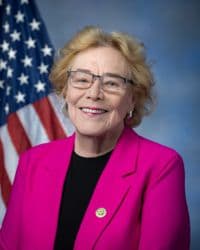
- Introduced
- 6/18/2026
- Last activity
- 6/25/2026 — Ordered to be Reported in the Nature of a Substitute (Amended) by the Yeas and Nays: 35 - 0.
- Sponsored by
- Zoe Lofgren
- Cosponsors
- - 1 - 1
- Introduced
What this bill would do
The Workforce for AI Trust Act amends existing laws to grow multidisciplinary teams focused on safe and trustworthy artificial intelligence. It allows the National Science Foundation to provide research fellowships for students and postdoctoral researchers across various disciplines, including humanities and social sciences. The bill also promotes AI skills training and workshops to accelerate scientific discovery. Additionally, it tasks the National Institute of Standards and Technology (NIST) with creating a workforce framework to define AI roles, skills, and competencies. This framework is intended to help identify and fill workforce gaps across government and industry.
Yes· 3 of 18
Would students be better off under this?+9
Directly provides funding for fellowships, stipends, and AI skills training.
Would people in their twenties and thirties be better off under this?+8
Highly beneficial for graduate and postdoctoral students through new fellowship and training opportunities.
Does this put more money into scientific research?+8
Directly expands NSF fellowships and training for AI research across multiple disciplines.
The opposite
Would immigrants be better off under this?-3
Fellowships are restricted to citizens, nationals, or lawful permanent residents.
Does this reduce what the federal government spends?-2
Increases federal spending through NSF fellowships and NIST workforce initiatives.
Does this make it easier for immigrants already here to become citizens?-2
Fellowship eligibility is strictly limited to US citizens, nationals, or lawful permanent residents.
Who it would affect, and how
Potential Positive Impacts for People
- Financial Support for Researchers: The bill provides for graduate fellowships covering tuition, fees, and stipends, as well as postdoctoral fellowships covering salaries, benefits, and relocation costs (Section 2(b)(1)(D)(ii)).
- Interdisciplinary Opportunities: It opens AI research funding to people in the humanities and social science disciplines, not just technical fields (Section 2(b)(1)(D)(i)).
- Enhanced Education and Training: The bill encourages AI skills-based training, certification programs, and experiential learning for undergraduate and graduate students (Section 2(b)(2)(A)).
- Workforce Guidance: By creating a common lexicon and description of skills needed for AI work, the NIST workforce framework helps education and training programs better prepare the public and private sector workforce (Section 3(c)(b)(1)(A) and (D)(ii)).
- Diverse Perspectives in Research: It requires merit review panels for AI research to include diverse perspectives from legal, linguistic, and ethics disciplines (Section 2(d)).
Potential Negative Impacts for People
- Limited Eligibility: Fellowship opportunities are restricted only to citizens, nationals, or lawful permanent residents of the United States (Section 2(b)(1)(D)(iii)(I)).
- Strict Academic Requirements: Postdoctoral fellowships are limited to those who received their doctoral degree no earlier than five years before the fellowship begins (Section 2(b)(1)(D)(iii)(IV)).
Groups and Interests Ranking
Every group the model scored this bill for, from -10 to +10. Hover a score for the reason it gave.
- Demographic And Interest Groups
- Good For Students+9Good For Young Adults+8Good For Business Owners+4Good For Middle Aged+4Good For Low Income Households+3Good For Middle Class Households+3Good For Union Workers+2Good For Immigrants-3
- Education And Technology
- Increases Scientific Research Funding+8Improves College Affordability+6Improves Data Privacy+2
- Economy And Finance
- Increases Job Creation+5Improves Economic Growth+4Improves Consumer Protection+3Improves Small Business Support+2Reduces Government Spending-2
- Governance And Ideology
- Improves Government Transparency+3Increases Federal Power+2
- Healthcare
- Increases Research Funding+5
- National Security And Foreign Policy
- Improves Cybersecurity Defense+4
- Social Issues And Justice
- Improves Pathway To Citizenship-2
- 7/22/2026
- 1 Cosponsor added.
- 6/25/2026
- Committee Consideration and Mark-up Session Held
- Ordered to be Reported in the Nature of a Substitute (Amended) by the Yeas and Nays: 35 - 0.
- 6/18/2026
- Referred to the House Committee on Science, Space, and Technology.
- 1 Cosponsor added.
- Introduced in House
 Angie Craig
Democrat · Minnesota
 Frank Lucas
Republican · Oklahoma