Bill · H.R. 9333· House(119-HR-9333)
AI Flaw Reporting and Security Enhancement Act
- Introduced
- 6/18/2026
- Last activity
- 6/25/2026 — Ordered to be Reported in the Nature of a Substitute by the Yeas and Nays: 35 - 0.
- Sponsored by
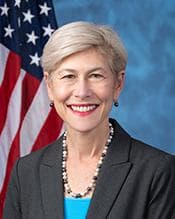
- Deborah Ross
- Cosponsors
- - 1 - 1
- Introduced
What this bill would do
The AI Flaw Reporting and Security Enhancement Act directs the Director of the National Institute of Standards and Technology (NIST) to create a program for the voluntary reporting, collection, and tracking of artificial intelligence flaws. In consultation with the Cybersecurity and Infrastructure Security Agency, NIST will work with industry, academia, and other groups to define AI flaws and develop technical standards for managing them. The bill also calls for the creation of infrastructure, which may include a national database of AI flaws. Finally, the Director of NIST must submit a report to Congress within three years regarding the implementation of the program.
Yes· 3 of 12
Does this better protect the country from computer attacks?+7
The bill focuses on detecting and monitoring AI flaws, which directly enhances cybersecurity posture.
Does this put more money into scientific research?+4
The bill encourages collaboration with academia and research institutions to develop AI flaw detection methods.
Does this make what the government does easier for the public to see?+4
The bill explicitly supports the development of norms for public disclosure and reporting of AI flaws.
The opposite
No question was scored the opposite.
Who it would affect, and how
Potential Positive Impacts for People
-
Improved AI Safety and Security: By supporting the development of technical approaches to accelerate the detection and monitoring of AI flaws, the bill aims to find issues faster (Section 2(b)(4)).
-
Clearer Understanding of AI Risks: The bill establishes common definitions and taxonomies for flaws, such as vulnerabilities, hazards, and catastrophes, which helps in managing and prioritizing these risks (Section 2(b)(1)).
-
Better Risk Management: The program supports the creation of methods to measure the severity or risk of AI flaws, allowing for the prioritization of remediation activities (Section 2(b)(3)).
-
Standardized Information Sharing: The development of standardized reporting mechanisms and guidelines for best practices helps different sectors track and report AI flaws consistently (Section 2(b)(5) and 2(b)(6)).
-
Public Awareness: The bill supports the development of norms and mechanisms for providing public information regarding AI flaws (Section 2(b)(6) and 2(b)(7)).
Potential Negative Impacts for People
- No negative impacts for individuals or groups are explicitly mentioned in the provided text.
Groups and Interests Ranking
Every group the model scored this bill for, from -10 to +10. Hover a score for the reason it gave.
- Demographic And Interest Groups
- Good For Business Owners+3Good For Students+3Good For Children+2Good For Middle Aged+2Good For Seniors+2Good For Young Adults+2
- National Security And Foreign Policy
- Improves Cybersecurity Defense+7
- Education And Technology
- Increases Scientific Research Funding+4Increases Big Tech Regulation+2
- Governance And Ideology
- Improves Government Transparency+4Increases Federal Power+2
- Economy And Finance
- Improves Consumer Protection+3
- 6/25/2026
- Committee Consideration and Mark-up Session Held
- Ordered to be Reported in the Nature of a Substitute by the Yeas and Nays: 35 - 0.
- 6/18/2026
- Referred to the House Committee on Science, Space, and Technology.
- 2 Cosponsors added.
- Introduced in House
 Donald Beyer
Democrat · Virginia
 Jeff Hurd
Republican · Colorado