Bill · H.R. 9295· House(119-HR-9295)
Stop Serial Litigation Act of 2026
- Introduced
- 6/11/2026
- Last activity
- 6/11/2026 — Referred to the House Committee on the Judiciary.
- Sponsored by
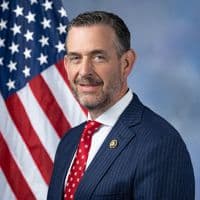
- Michael Rulli
- Cosponsors
- - 1 - 0
- Introduced
- In Committee
What this bill would do
The Stop Serial Litigation Act of 2026 sets limits on the fees and expenses that can be awarded during agency adjudications and civil actions. It establishes a $300,000 annual cap on awards for most organizations, businesses, and local governments, though the Veteran's Administration and Social Security Administration are exempt from this cap. The bill also sets specific hourly caps for attorney and agent fees, generally ranging from $125 to $175 per hour. Additionally, it requires more detailed reporting of the time spent and specific tasks performed when computing fees.
Yes· 3 of 7
Does this reduce what the federal government spends?+3
The bill limits the amount the government must pay in fees and expenses during agency adjudications and civil actions.
Does this reduce what the federal government owes?+2
Capping attorney fees and expert witness costs may reduce government expenditures in legal settlements.
Does this make the government pay for what it commits to?+2
Implements stricter controls and caps on the reimbursement of legal fees from the public treasury.
The opposite· 3 of 6
Does this better protect air, water and wildlife?-3
Capping fee recovery may deter environmental non-profits from litigating against government agencies.
Does this make it easier to run a small business?-3
Small businesses may face limits on recovering full legal fees when suing government agencies.
Does this give people more protection from unfair business practices?-2
Capping fee recovery for organizations may discourage non-profits from bringing consumer protection lawsuits against agencies.
Who it would affect, and how
Potential Positive Impacts for People
- Capping Expert Witness Costs: The bill ensures that no expert witness is paid more than the highest rate paid by the agency or the United States, which may limit government spending on these services (Section 2(2)(b)(1)(A)(i) and Section 3(1)(A)(i)).
Potential Negative Impacts for People
-
Limits on Fee Recoveries: Organizations, including 501(c)(3) nonprofits, unincorporated businesses, partnerships, corporations, and local governments, cannot receive more than $300,000 in fees and expenses per year, except in cases involving the Social Security Administration or Veteran's Administration (Section 2(1)(B) and Section 3(2)).
-
Reduced Attorney Pay: Attorney and agent fees are capped at $125 per hour for Veteran's Administration or Social Security Administration cases, and $175 per hour for other agencies, which may limit the compensation lawyers can receive (Section 2(2)(b)(1)(A)(ii) and Section 3(1)(A)(ii)).
-
Lower Rates for Specific Issues: Fees awarded for deciding if a government position was substantially justified or if special circumstances make an award unjust are limited to half of the standard hourly fee (Section 2(2)(b)(1)(A)(ii)(II) and Section 3(1)(A)(ii)(II)).
Groups and Interests Ranking
Every group the model scored this bill for, from -10 to +10. Hover a score for the reason it gave.
- Environment Energy And Infrastructure
- Improves Environmental Protections-3
- Economy And Finance
- Reduces Government Spending+3Improves Fiscal Responsibility+2Reduces National Debt+2Improves Small Business Support-3Improves Consumer Protection-2
- Governance And Ideology
- Increases Federal Power+2Improves Government Transparency+1Improves Due Process-2Increase States Rights-2
- Demographic And Interest Groups
- Good For People With Disabilities+1Good For Veterans+1Good For Business Owners-2
- 8/3/2026
- 1 Cosponsor added.
- 6/11/2026
- Referred to the House Committee on the Judiciary.
- Introduced in House
 Vince Fong
Republican · California