Bill · H.R. 9267· House(119-HR-9267)
Transit Oriented Development Act of 2026
- Introduced
- 6/11/2026
- Last activity
- 6/11/2026 — Referred to the House Committee on Ways and Means.
- Sponsored by
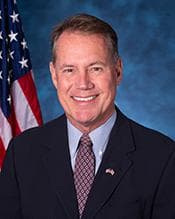
- Ed Case
- Cosponsors
- - 1 - 1
- Introduced
- In Committee
What this bill would do
The Transit Oriented Development Act of 2026 modifies the low-income housing tax credit to encourage affordable housing near transit. It increases the eligible basis for new buildings and rehabilitation expenditures to 150 percent for buildings in designated transit-oriented development areas. For Hawaii, Alaska, or U.S. territories, this increase is 155 percent. These areas must be zoned for high-density and located within 1/2 mile of a rail, bus, harbor, or waterway station. The bill also requires the Secretary of Housing and Urban Development to study geographic cost-of-living differences to recommend formula adjustments for tax credit allocations.
Yes· 3 of 36
Would households on low incomes be better off under this?+9
Directly targets the creation of more affordable housing near critical transportation hubs.
Does this make housing cost less?+8
Significantly increases incentives for the creation and rehabilitation of affordable housing.
Would people in cities be better off under this?+7
Directly promotes high-density development in metropolitan areas near transit.
The opposite
Does this reduce what the federal government owes?-1
Increasing tax credit basis reduces federal tax revenue.
Who it would affect, and how
Potential Positive Impacts for People
-
Increased Incentive for Affordable Housing: By increasing the eligible basis to 150 percent (or 155 percent in Hawaii, Alaska, or territories) for buildings in transit-oriented development areas, the bill incentivizes the creation and rehabilitation of affordable housing in these locations. (Section 2(a)(i) and (ii))
-
Better Access to Transportation: The bill targets development within 1/2 mile of rail, bus, harbor, or waterway stations, which could place low-income housing closer to transit options. (Section 2(a)(iii))
-
Addressing Cost-of-Living Gaps: The requirement for a study on cost-of-living differences based on geography and transit accessibility may lead to fairer tax credit allocation formulas across different states. (Section 3)
Potential Negative Impacts for People
-
Limited Availability of Designated Areas: The bill limits the areas that can be designated for these credits to no more than 20 percent of the population of metropolitan and nonmetropolitan statistical areas, which may restrict where these benefits are applied. (Section 2(a)(iv))
-
Exclusion of High Cost Areas: Buildings already determined to be in high cost areas under subparagraph (B) cannot also be treated as located in a transit-oriented development area for this specific credit increase. (Section 2(a)(v))
Groups and Interests Ranking
Every group the model scored this bill for, from -10 to +10. Hover a score for the reason it gave.
- Demographic And Interest Groups
- Good For Low Income Households+9Good For Urban Residents+7Good For People With Disabilities+6Good For Retirees+5Good For Seniors+5Good For Students+5Good For Young Adults+5Good For African Americans+4Good For Asian Americans+4Good For Business Owners+4Good For Hispanic Americans+4Good For Immigrants+4Good For Union Workers+4Good For Children+3Good For L G B T Q Community+3Good For Men+3Good For Middle Aged+3Good For Native Americans+3Good For Veterans+3Good For Women+3Good For High Net Worth Individuals+2Good For Middle Class Households+2Good For Rural Residents+2Good For White Americans+2
- Social Issues And Justice
- Improves Affordable Housing+8Reduces Homelessness+5Improves Poverty Reduction+4Improves Racial Equity+2
- Environment Energy And Infrastructure
- Improves Public Transit+6Reduces Carbon Emissions+4Improves Rural Development+1
- Economy And Finance
- Increases Job Creation+3Improves Economic Growth+2Improves Small Business Support+2Reduces Small Business Taxes+2Reduces National Debt-1
- Governance And Ideology
- Increases Federal Power+1
- 6/11/2026
- Sponsor introductory remarks on measure. (CR E570)
- Referred to the House Committee on Ways and Means.
- 2 Cosponsors added.
- Introduced in House
 James Moylan
Republican · Guam
 Jill Tokuda
Democrat · Hawaii