Bill · H.R. 9253· House(119-HR-9253)
Protect Working Musicians Act of 2026
- Introduced
- 6/10/2026
- Last activity
- 6/10/2026 — Referred to the House Committee on the Judiciary.
- Sponsored by
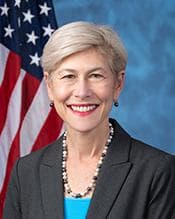
- Deborah Ross
- Cosponsors
- - 7 - 0
- Introduced
- In Committee
What this bill would do
The Protect Working Musicians Act of 2026 aims to empower independent music creator owners to negotiate collectively with dominant online platforms. Currently, these creators face a power imbalance when dealing with large distribution platforms regarding music licensing. The bill provides a safe harbor from antitrust laws for specific collective actions. This allows independent owners to negotiate terms or collectively refuse to license their music to dominant platforms or generative artificial intelligence companies. The goal is to create fairer markets for the use and licensing of recorded music and musical works.
Yes· 3 of 7
Would business owners be better off under this?+6
The bill provides legal protections for small-scale music creators and independent businesses to negotiate collectively.
Does this make it easier to run a small business?+6
The bill provides a safe harbor for independent creators to negotiate more effectively against dominant platforms.
Would union members be better off under this?+5
The bill empowers independent creators to engage in collective bargaining-style negotiations.
The opposite
No question was scored the opposite.
Who it would affect, and how
Potential Positive Impacts for People
-
Empowerment of Independent Creators: The bill allows Independent Music Creator Owners to collectively negotiate licensing terms or collectively refuse to license their music to dominant platforms or generative artificial intelligence companies without being held liable under antitrust laws (Section 3(b)).
-
Addressing Market Imbalances: The Act seeks to rectify a situation where dominant online music distribution platforms use market power to force music creators into licensing agreements that do not reflect market value (Section 2(4)).
-
Protection Against Unlicensed Use: The bill addresses a system where platforms profit from unlicensed uploads while placing the burden of finding those instances on the creators (Section 2(5)).
-
Support for Music Careers: By allowing for better negotiation, the bill aims to address the issue where musicians struggle to make a living, which has reportedly caused some to give up their dreams (Section 2(9)).
Potential Negative Impacts for People
-
Negotiation Restrictions: The liability protection for collective negotiations is only available if the negotiations are not limited to price and are nondiscriminatory among similarly situated independent creator owners (Section 3(b)(1)).
-
Limited Scope of Protection: The safe harbor for collective action does not apply if the negotiations involve any person who is not an Independent Music Creator Owner or a Dominant Online Music Distribution Platform (Section 3(b)(3)).
Groups and Interests Ranking
Every group the model scored this bill for, from -10 to +10. Hover a score for the reason it gave.
- Demographic And Interest Groups
- Good For Business Owners+6Good For Union Workers+5Good For Low Income Households+3Good For Middle Class Households+2
- Economy And Finance
- Improves Small Business Support+6Increases Job Creation+2
- Education And Technology
- Increases Big Tech Regulation+4
- 10/9/2026
- 3 Cosponsors added.
- 9/2/2026
- 1 Cosponsor added.
- 6/10/2026
- Referred to the House Committee on the Judiciary.
- 3 Cosponsors added.
- Introduced in House
One bill Congress.gov lists as related to this one — companions in the other chamber, earlier versions, and bills this one absorbed or was folded into.
 Steve Cohen
Democrat · Tennessee
 Lloyd Doggett
Democrat · Texas
 Sarah Elfreth
Democrat · Maryland
 Cleo Fields
Democrat · Louisiana
 Daniel Goldman
Democrat · New York
 Brad Sherman
Democrat · California
 Lateefah Simon
Democrat · California