Bill · H.R. 9229· House(119-HR-9229)
Seaport Security Act of 2026
- Introduced
- 6/9/2026
- Last activity
- 6/9/2026 — Referred to the Committee on the Judiciary, and in addition to the Committee on Transportation and Infrastructure, for a period to be subsequently determined by the Speaker, in each case for consideration of such provisions as fall within the jurisdiction of the committee concerned.
- Sponsored by
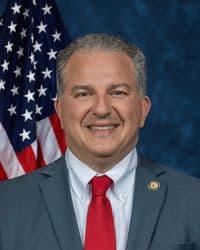
- Jimmy Patronis
- Cosponsors
- - 3 - 0
- Introduced
- In Committee
What this bill would do
The Seaport Security Act of 2026 aims to protect United States seaports from the dangers posed by unmanned aircraft systems. Congress has found that drone technology presents risks to public safety and national security, specifically regarding criminal activities like smuggling and potential attacks on maritime infrastructure. This bill establishes restricted "covered airspace" above seaports extending up to 1,000 feet, or as designated by the FAA Administrator. It prohibits the operation of unauthorized drones within these areas while allowing specific exceptions for federal agencies, law enforcement, and emergency responses. The act also provides authorities to detect, mitigate, and disable unauthorized drones. Finally, it establishes civil and criminal penalties for those who violate these new regulations.
Yes
Does this better protect the country from computer attacks?+3
The bill protects seaport security systems from interference by unauthorized drones.
Does this change how police departments operate?+2
The bill expands the authorities of law enforcement and federal agencies to detect and disable unauthorized drones in seaport airspace.
The opposite
Does this make it easier to run a small business?-3
The bill imposes strict airspace restrictions and heavy penalties that may impact small drone operators and commercial interests near seaports.
Would business owners be better off under this?-2
The bill imposes significant civil and criminal penalties on those operating unmanned aircraft systems.
Does this protect people from being watched or searched?-2
The bill creates new criminal penalties for those using drones for surveillance, which may impact privacy through increased government enforcement powers.
Who it would affect, and how
Potential Positive Impacts for People
-
Enhanced National and Economic Security: By restricting unauthorized drones, the bill seeks to protect seapots that handle billions of tons of cargo and millions of passengers from attacks that could threaten the nation (Section 2).
-
Increased Public Safety: The bill addresses the potential dangers drone technology poses to public safety, such as drug trafficking, human trafficking, and smuggling (Section 2).
-
Clear Exceptions for Safety and Law Enforcement: Authorized operations include those by the Department of Homeland Security, Department of Defense, and local law enforcement, as well as those necessary to respond to emergencies involving immediate threats to human life or property (Section 3(a)(3)(c)).
-
Operational Security for Seaports: The bill allows seaports or their contractors to operate drones for operational, safety, or security purposes with proper notice (Section 3(a)(3)(c)).
Potential Negative Impacts for People
-
Civil Penalties: Individuals who violate the new restrictions may be subject to civil penalties of up to $25,000 per violation and the loss of their unmanned aircraft (Section 3(a)(3)(f)).
-
Criminal Penalties and Imprisonment: Willful violations of the law can result in fines and up to 2 years in prison, while violations intended to surveil, damage, or disrupt criminal or terrorist activity can result in up to 10 years in prison (Section 3(a)(3)(g)).
-
Risk of Property Seizure: Unauthorized unmanned aircraft used in violation of these rules may be seized or forfeited (Section 3(a)(3)(f)).
Groups and Interests Ranking
Every group the model scored this bill for, from -10 to +10. Hover a score for the reason it gave.
- Economy And Finance
- Improves Small Business Support-3
- National Security And Foreign Policy
- Improves Cybersecurity Defense+3
- Demographic And Interest Groups
- Good For Business Owners-2
- Governance And Ideology
- Improves Privacy Rights-2
- Social Issues And Justice
- Improves Policing Reform+2
- 7/22/2026
- 1 Cosponsor added.
- 6/23/2026
- 1 Cosponsor added.
- 6/9/2026
- Referred to the Committee on the Judiciary, and in addition to the Committee on Transportation and Infrastructure, for a period to be subsequently determined by the Speaker, in each case for consideration of such provisions as fall within the jurisdiction of the committee concerned.
- 1 Cosponsor added.
- Introduced in House
 Jack Bergman
Republican · Michigan
 Mike Ezell
Republican · Mississippi
 Mike Haridopolos
Republican · Florida