Bill · H.R. 9210· House(119-HR-9210)
BLANCHE Act of 2026
- Introduced
- 6/9/2026
- Last activity
- 6/9/2026 — Referred to the House Committee on the Judiciary.
- Sponsored by
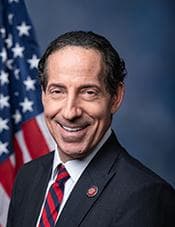
- Jamie Raskin
- Cosponsors
- - 9 - 0
- Introduced
- In Committee
What this bill would do
The BLANCHE Act of 2026 aims to change how the United States handles legal settlements with the President. It prohibits agreements where the President or a third party acting for the President receives payments from the United States. Any such agreement is considered void unless a court order approves it. To get court approval, a hearing must be held with evidence. The court must find that the agreement is in the interest of justice and not fraudulent or collusive. This law would apply to agreements made before, on, or after the date it becomes law.
Yes· 3 of 5
Does this make what the government does easier for the public to see?+7
Requires court hearings and public evidence for presidential settlements.
Does this make the government pay for what it commits to?+5
Requires court oversight and evidence of good faith before government funds are paid in presidential settlements.
Does this protect the right to fair treatment by the courts?+4
Establishes a formal judicial process and evidence-based findings for specific settlement types.
The opposite
Would people with substantial wealth be better off under this?-3
Specifically restricts the ability of the President (likely a high net worth individual) to receive government settlement payments.
Would the very wealthiest people be better off under this?-3
Specifically restricts the ability of the President to receive government settlement payments.
Would billionaires be better off under this?-3
Specifically restricts the ability of the President to receive government settlement payments.
Who it would affect, and how
Potential Positive Impacts for People
-
Prevents direct payments to the President: Section 2(a) prohibits the President or a third party at the President's direction from receiving cash or in-kind payments from the United States via covered agreements. This prevents the use of public funds for such payments.
-
Requires court oversight: Section 2(b) ensures that any settlement is void unless a court conducts a hearing and makes specific findings. This adds a layer of accountability by requiring the court to confirm the agreement is not collusive, not a fraud on the court, and in the interest of justice.
-
Ensures legal diligence: Section 2(b)(2)(C) requires a court to find that the United States made a good faith effort to explore defenses and has a reasonable legal basis for the settlement. This protects public interests by ensuring the government does not settle claims without a valid reason.
Potential Negative Impacts for People
- Increased litigation: Section 2(b)(1) requires the President to file a civil action in court to seek an order for a covered agreement if no action was already filed. This could lead to more court proceedings.
Groups and Interests Ranking
Every group the model scored this bill for, from -10 to +10. Hover a score for the reason it gave.
- Governance And Ideology
- Improves Government Transparency+7Improves Due Process+4
- Demographic And Interest Groups
- Good For Billionaires-3Good For High Net Worth Individuals-3Good For Ultra High Net Worth Individuals-3
- Economy And Finance
- Improves Fiscal Responsibility+5Reduces Government Spending+2Reduces National Debt+1
- 8/13/2026
- 1 Cosponsor added.
- 8/6/2026
- 3 Cosponsors added.
- 7/13/2026
- 1 Cosponsor added.
- 7/2/2026
- 1 Cosponsor added.
- 6/30/2026
- 1 Cosponsor added.
- 6/29/2026
- 2 Cosponsors added.
- 6/9/2026
- Referred to the House Committee on the Judiciary.
- Introduced in House
 Ed Case
Democrat · Hawaii
 Gilbert Cisneros
Democrat · California
 Christopher Deluzio
Democrat · Pennsylvania
 Madeleine Dean
Democrat · Pennsylvania
 Rick Larsen
Democrat · Washington
 Analilia Mejia
Democrat · New Jersey
 Hillary Scholten
Democrat · Michigan
 Andrea Salinas
Democrat · Oregon
 Bonnie Watson Coleman
Democrat · New Jersey