Bill · H.R. 9187· House(119-HR-9187)
Bipartisan Social Security Commission Act of 2026
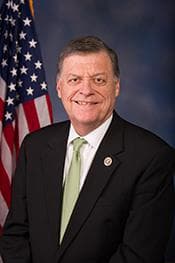
- Introduced
- 6/8/2026
- Last activity
- 6/8/2026 — Referred to the Committee on Ways and Means, and in addition to the Committee on Rules, for a period to be subsequently determined by the Speaker, in each case for consideration of such provisions as fall within the jurisdiction of the committee concerned.
- Sponsored by
- Tom Cole
- Cosponsors
- - 3 - 4
- Introduced
- In Committee
What this bill would do
This bill establishes the Commission on Long-Term Social Security Solvency. The Commission is tasked with creating recommendations and proposed legislation to ensure the solvency of the Federal Old-Age and Survivors Insurance Trust Fund and the Federal Disability Insurance Trust Fund for at least 75 years. The Commission consists of 13 members appointed by various congressional leaders and the President. It is authorized to receive official data, hire a Director and staff, and contract with agencies. Once the Commission submits its report, a specific process is triggered for the expedited consideration of its recommendations. The Act also includes provisions for how an "approval bill" containing these recommendations is introduced and passed through both Houses of Congress.
Yes· 3 of 11
Would retired people be better off under this?+6
Addresses the fundamental solvency of the funds providing their income.
Does this strengthen Social Security?+6
The primary goal of the bill is to secure the long-term solvency of Social Security for 75 years.
Would people over 65 be better off under this?+5
Focuses on ensuring the long-term solvency of benefits they currently rely on.
The opposite
No question was scored the opposite.
Who it would affect, and how
Potential Positive Impacts for People
-
Long-term financial stability of Social Security: The Commission is directed to find ways to achieve solvency for both the Federal Old-sAge and Survivors Insurance Trust Fund and the Federal Disability Insurance Trust Fund for at least 75 years (Section 3).
-
Public transparency and input: The Commission is required to hold at least one hearing that is open to the public, which allows for public comment and participation (Section 5(d)).
-
Expert involvement: The bill requires that at least one member appointed by each political party be an expert who is not an elected official or a federal employee (Section 4(b)).
Potential Negative Impacts for People
-
Limited debate on recommendations: When the "approval bill" containing the Commission's recommendations is considered, debate in the House is limited to 4 hours and debate in the Senate is limited to 30 hours (Section 9(a)(2)(C) and Section 9(a)(3)(C)).
-
Prohibition of changes to the legislation: No amendments or motions to strike provisions from the approval bill are allowed during consideration in either the House or the Senate (Section 9(a)(4)).
-
Restricted legislative process: The bill mandates an expedited process where committees must report the bill without amendment and certain motions, such as the motion to reconsider a vote, are not allowed (Section 9(a)(2) and Section 9(a)(3)).
Groups and Interests Ranking
Every group the model scored this bill for, from -10 to +10. Hover a score for the reason it gave.
- Demographic And Interest Groups
- Good For Retirees+6Good For People With Disabilities+5Good For Seniors+5Good For Low Income Households+2Good For Middle Class Households+2Good For Middle Aged+1Good For Young Adults+1
- Social Issues And Justice
- Improves Social Security+6
- Economy And Finance
- Improves Fiscal Responsibility+4Reduces National Debt+1
- Governance And Ideology
- Improves Government Transparency+2
- 9/15/2026
- 2 Cosponsors added.
- 7/20/2026
- 2 Cosponsors added.
- 6/23/2026
- 2 Cosponsors added.
- 6/8/2026
- Referred to the Committee on Ways and Means, and in addition to the Committee on Rules, for a period to be subsequently determined by the Speaker, in each case for consideration of such provisions as fall within the jurisdiction of the committee concerned.
- 1 Cosponsor added.
- Introduced in House
2 bills Congress.gov lists as related to this one — companions in the other chamber, earlier versions, and bills this one absorbed or was folded into.
 Don Bacon
Republican · Nebraska
 Donald Davis
Democrat · North Carolina
 Scott Franklin
Republican · Florida
 Chrissy Houlahan
Democrat · Pennsylvania
 Adrian Smith
Republican · Nebraska
 Thomas Suozzi
Democrat · New York
 Derek Tran
Democrat · California