Bill · H.R. 9139· House(119-HR-9139)
Medicaid Financing Clarification Act of 2026
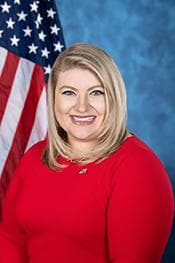
- Introduced
- 6/4/2026
- Last activity
- 6/4/2026 — Referred to the House Committee on Energy and Commerce.
- Sponsored by
- Kat Cammack
- Cosponsors
- - 3 - 0
- Introduced
- In Committee
What this bill would do
H.R. 9139, known as the Medicaid Financing Clarification Act of 2026, was introduced in the House on June 4, 2026. The bill amends title XIX of the Social Security Act to clarify congressional intent regarding Medicaid financing policies. Specifically, it updates state plans for medical assistance regarding funds from local sources. It also adds new definitions to the Social Security Act for the terms "public funds," "political subdivision," and "public agency." These changes officially define what money and government entities can be involved in Medicaid financing.
Yes· 3 of 13
Does this put more money into Medicaid, the health coverage for people on low incomes?+3
Clarifying statutory definitions for public funds supports stable local and state funding interactions for Medicaid.
Does this make what the government does easier for the public to see?+3
Providing explicit statutory definitions for public funds, political subdivisions, and public agencies enhances regulatory clarity.
Would people over 65 be better off under this?+2
Seniors heavily rely on Medicaid for long-term care, making financing stability and transparency beneficial.
The opposite
Does this give the federal government more power?-1
The restriction on using federal funds as public funds imposes federal limitations on local financing mechanisms.
Who it would affect, and how
Potential Positive Impacts for People
- Section 2(a) and Section 2(b): The bill explicitly clarifies that state plans for medical assistance can include public funds transferred from or certified by political subdivisions. This provides a clear statutory definition of "public funds" (such as tax revenues, fees, and grants) and "political subdivisions" (such as counties, cities, and towns), which ensures transparency in how local government resources interact with Medicaid financing.
Potential Negative Impacts for People
- Section 2(b): The bill strictly limits the use of money by stating that Federal funds may not be used as public funds unless authorized by Federal law to be used as matching funds for other Federal funds. Depending on existing funding streams, this restriction on federal money could create administrative burdens or limit how certain local entities manage their budgets for Medicaid programs.
Groups and Interests Ranking
Every group the model scored this bill for, from -10 to +10. Hover a score for the reason it gave.
- Demographic And Interest Groups
- Good For Low Income Households+2Good For People With Disabilities+2Good For Retirees+2Good For Seniors+2Good For Children+1Good For Middle Aged+1Good For Rural Residents+1Good For Young Adults+1
- Healthcare
- Increases Medicaid Funding+3Improves Healthcare Access+2
- Governance And Ideology
- Improves Government Transparency+3Increase States Rights+2Increases Federal Power-1
- Economy And Finance
- Improves Fiscal Responsibility+2
- 6/4/2026
- Referred to the House Committee on Energy and Commerce.
- 3 Cosponsors added.
- Introduced in House
 Vern Buchanan
Republican · Florida
 Dan Crenshaw
Republican · Texas
 Nathaniel Moran
Republican · Texas