Bill · H.R. 9112· House(119-HR-9112)
CREATOR Act
- Introduced
- 6/2/2026
- Last activity
- 6/2/2026 — Referred to the House Committee on the Judiciary.
- Sponsored by
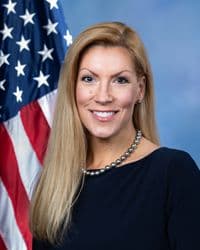
- Beth Van Duyne
- Cosponsors
- - 1 - 4
- Introduced
- In Committee
What this bill would do
This bill is known as the CREATOR Act and it gives visual artists a brand new federal intellectual property right to control the commercial use or public distribution of stylistic impersonations of their work. It protects living artists for their entire lives, and allows the rights of deceased artists to last for up to fifty years through a renewal process. The bill targets people or artificial intelligence systems that are intentionally set up or marketed to copy a specific artist's unique visual style to mislead the public or hurt their market. It also sets up rules for online services to take down infringing user content and gives courts the power to hand out financial penalties to violators. Finally, the legislation protects general-purpose artificial intelligence tools and allows for common-sense exceptions like parody, news reporting, and criticism.
Yes· 3 of 5
Does this put more rules on large technology companies?+3
The bill imposes liability on AI providers who intentionally configure or market systems to emulate specific artists' styles.
Would people over 65 be better off under this?+3
The bill allows for the protection of a deceased artist's legacy for up to 50 years through renewalable rights.
Does this make what the government does easier for the public to see?+2
The bill requires the Register of Copyrights to maintain a publicly accessible online directory of post-mortem rights.
The opposite
Would business owners be better off under this?-3
Commercial actors face significant statutory damages of up to $150,000 for willful stylistic impersonation.
Who it would affect, and how
Potential Positive Impacts for People
-
Gives visual artists and right holders the exclusive right to authorize or stop the commercial exploitation and public distribution of a stylistic impersonation of the artist, which protects their hard work and unique style from being ripped off, as found in Section 2.
-
Protects consumers and the public from being misled by requiring online platforms to act quickly to remove unauthorized stylistic impersonations when valid notices are received, as outlined in Section 5.
-
Encourages free speech and creativity by explicitly protecting commentary, criticism, scholarship, research, teaching, parody, satire, and news reporting from liability, as detailed in Section 4.
Potential Negative Impacts for People
-
Imposes strict financial penalties and legal burdens on commercial actors and individuals who intentionally engage in stylistic impersonation, with statutory damages ranging from thousands to hundreds of thousands of dollars per work, as set forth in Section 6.
-
Creates potential legal liability and notice requirements for online service providers that fail to expeditiously remove infringing user-generated content after receiving a valid notice, as described in Section 3 and Section 5.
Groups and Interests Ranking
Every group the model scored this bill for, from -10 to +10. Hover a score for the reason it gave.
- Governance And Ideology
- Improves Government Transparency+2Improves Privacy Rights+2
- Education And Technology
- Increases Big Tech Regulation+3
- Economy And Finance
- Improves Consumer Protection+2
- Demographic And Interest Groups
- Good For Seniors+3Good For Business Owners-3
- 9/24/2026
- 1 Cosponsor added.
- 6/23/2026
- 2 Cosponsors added.
- 6/2/2026
- Referred to the House Committee on the Judiciary.
- 2 Cosponsors added.
- Introduced in House
 Yvette Clarke
Democrat · New York
 Valerie Foushee
Democrat · North Carolina
 Jonathan Jackson
Democrat · Illinois
 Ro Khanna
Democrat · California
 Burgess Owens
Republican · Utah