Bill · H.R. 9103· House(119-HR-9103)
Merit Restoration Act
- Introduced
- 6/2/2026
- Last activity
- 6/2/2026 — Referred to the House Committee on Science, Space, and Technology.
- Sponsored by
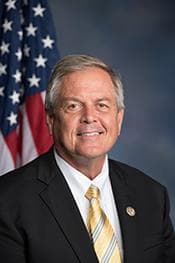
- Ralph Norman
- Cosponsors
- - 13 - 0
- Introduced
- In Committee
What this bill would do
This bill is known as the Merit Restoration Act. It stops Federal research agencies and people who receive Federal research grants from using certain diversity, equity, or inclusion practices. Under the text, Federal research agencies cannot use these practices when they award, evaluate, or continue a research grant. Grant recipients also cannot use these practices while carrying out the research grant. If a recipient breaks this rule, the agency awarding the grant must freeze their Federal funds. If the agency decides a violation happened, they must also make the recipient pay back any Federal funds used in the violation.
Yes
Does this protect what people are allowed to say in public life?+3
The bill protects employees from being forced to undergo specific ideological trainings or sign statements regarding systemic privilege as a condition of employment.
Does this give the federal government more power?+3
The bill expands federal agency oversight and enforcement duties by requiring them to monitor, freeze, and claw back grant funds.
Does this protect the individual right to speak freely?+3
Prohibiting mandatory statements of assent or specific ideological trainings protects individual freedom of expression and belief.
The opposite· 3 of 11
Does this narrow racial gaps in how people are treated?-5
The legislation prohibits diversity, equity, and inclusion practices in federal research grants, which critics argue undermines racial equity initiatives.
Would Black Americans be better off under this?-3
Eliminating equity initiatives and targeted diversity programs may negatively impact support structures for African American researchers and students.
Would Hispanic Americans be better off under this?-3
Prohibiting consideration of race and ethnicity in federal research grants could reduce targeted opportunities for Hispanic Americans.
Who it would affect, and how
Potential Positive Impacts for People
-
Section 2(a)(1) and Section 2(a)(2) prohibit Federal research agencies and grant recipients from discriminating for or against any person based on race, color, ethnicity, religion, biological sex, or national origin. This might be seen as positive because it protects individuals from discrimination based on these specific traits in research grants.
-
Section 2(a)(2) and Section 2(d)(3)(B) stop grant recipients from requiring employees to undergo training or education that asserts a particular race, color, ethnicity, religion, biological sex, or national origin is inherently superior, inferior, oppressive, or privileged as a condition of employment, promotion, or presentation. This might be considered positive for workers who do not want to be forced into taking such training.
-
Section 2(a)(2) and Section 2(d)(3)(C) prevent grant recipients from forcing employees to sign or assent to statements or codes of conduct claiming that a particular race, color, ethnicity, religion, biological sex, or national origin is inherently superior, inferior, oppressive, or privileged to keep their jobs or advance. This could be viewed as a positive protection for employee free expression and choice.
Potential Negative Impacts for People
-
Section 2(b)(1) requires Federal research agencies to freeze the receipt of Federal funds for a research grant if a recipient is alleged to have used a prohibited diversity, equity, or inclusion practice. This could be viewed as negative because it cuts off funding before a final determination of a violation is made.
-
Section 2(b)(2) mandates that if a Federal research agency determines a recipient committed a violation, the agency must require the recipient to repay any Federal funds used pursuant to the violation. This might be seen as a negative financial burden on the individuals or groups working on the research grant if funds must be paid back.
Groups and Interests Ranking
Every group the model scored this bill for, from -10 to +10. Hover a score for the reason it gave.
- Demographic And Interest Groups
- Good For African Americans-3Good For Hispanic Americans-3Good For Native Americans-3Good For L G B T Q Community-2Good For Students-2Good For Women-2
- Social Issues And Justice
- Improves Freedom Of Speech+3Improves Racial Equity-5Improves Gender Equality-3
- Governance And Ideology
- Improves Freedom Of Speech+3Increases Federal Power+3Improves Due Process-2
- Education And Technology
- Increases Scientific Research Funding-2
- Healthcare
- Increases Research Funding-2
- 9/2/2026
- 1 Cosponsor added.
- 7/13/2026
- 1 Cosponsor added.
- 6/30/2026
- 1 Cosponsor added.
- 6/23/2026
- 1 Cosponsor added.
- 6/18/2026
- 1 Cosponsor added.
- 6/10/2026
- 1 Cosponsor added.
- 6/8/2026
- 3 Cosponsors added.
- 6/4/2026
- 1 Cosponsor added.
- 6/3/2026
- 2 Cosponsors added.
- 6/2/2026
- Referred to the House Committee on Science, Space, and Technology.
- 1 Cosponsor added.
- Introduced in House
 Tim Burchett
Republican · Tennessee
 Sheri Biggs
Republican · South Carolina
 Earl Carter
Republican · Georgia
 Andrew Clyde
Republican · Georgia
 Russ Fulcher
Republican · Idaho
 Randy Fine
Republican · Florida
 Clay Fuller
Republican · Georgia
 Paul Gosar
Republican · Arizona
 Clay Higgins
Republican · Louisiana
 Pat Harrigan
Republican · North Carolina
 Mark Harris
Republican · North Carolina
 W. Steube
Republican · Florida
 Keith Self
Republican · Texas