Bill · H.R. 9070· House(119-HR-9070)
OPEN Act
- Introduced
- 5/29/2026
- Last activity
- 7/7/2026 — Referred to the Subcommittee on Oversight, Investigations, and Accountability.
- Sponsored by
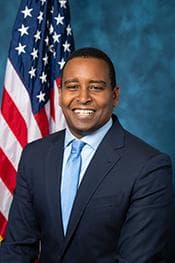
- Joe Neguse
- Cosponsors
- - 3 - 0
- Introduced
- In Committee
What this bill would do
The Oversight, Protection, and Enforcement Notification Act (OPEN Act) aims to improve immigration enforcement transparency, civil rights, and accountability. It grants Members of Congress unrestricted access to immigration detention facilities without advance notice. The bill establishes public reporting requirements for incidents involving excessive force, unauthorized conduct, and wrongful detention. It sets strict requirements for detainee rights, including timely family notification, phone calls, and medical care. The legislation also regulates facility transfers and places restrictions on converting existing buildings into detention centers. Finally, the bill requires judicially enforceable warrants issued by a judge for arrests and detentions, with specific limits on administrative warrants.
Yes· 3 of 17
Would immigrants be better off under this?+6
Significantly enhances rights, medical care, family notification, transparency, and due process protections for detained immigrants.
Does this make what the government does easier for the public to see?+6
Significantly enhances transparency by requiring public reporting on enforcement incidents and granting Members of Congress unannounced access to facilities.
Does this protect the right to fair treatment by the courts?+5
Mandates judicially enforceable warrants for arrests and detentions and provides legal remedies in removal proceedings for violations.
The opposite
Does this tighten control of the border?-2
Imposes additional procedural hurdles and warrant requirements on immigration enforcement actions.
Would business owners be better off under this?-1
Imposes stricter operational standards and potential contractual requirements on facility operators.
Who it would affect, and how
Potential Positive Impacts for People
- Members of Congress are given unrestricted access, without advance notice, to all immigration detention facilities operated by the Department of Homeland Security under Section 3(a)(1). This provision allows elected officials to directly observe conditions of confinement and compliance with federal laws, helping hold officials accountable.
- Detained individuals are guaranteed access to at least one phone call and notification of their immediate family within five hours of detention under Section 4(b)(1) and Section 4(b)(2). This ensures detainees can quickly let their loved ones know where they are.
- Detainees are provided timely medical and mental health services, including emergency care and chronic condition management, under Section 4(c)(1). Additionally, Section 4(c)(4) allows family members or legal representatives to drop off valid prescription medications and necessary medical devices, such as CPAP machines and glucose monitors, for a detainee's use after security and medical review.
- Section 4(d)(4) establishes minimum transportation protections, requiring seatbelts, regular bathroom breaks at least once every two hours, and access to adequate temperature control, food, drinking water, and necessary medications during transport. This directly safeguards the physical well-being of individuals being moved between facilities.
- Under Section 6(a), immigration enforcement officers and agents may not arrest or detain an individual without a judicially enforceable warrant issued by a magistrate judge or an Article III judge. This protects individuals from arbitrary arrests by requiring judicial review.
Potential Negative Impacts for People
- Section 3(a)(5)(A) mandates administrative or contractual disciplinary action for officers, employees, or contractors who knowingly delay, restrict, or deny access to a facility to Members of Congress. While intended for accountability, this could create a heavy administrative burden and potential operational friction for facility staff managing visitor access logs and schedules.
- Section 5(b)(6)(B) requires the Secretary of Homeland Security to certify that each new immigration detention center adheres to all applicable state health and safety standards unless they conflict with federal law. This could potentially slow down the establishment of necessary facilities or create complex legal disputes between state and federal authorities over building codes and operational rules.
- Section 6(b)(2) provides an exception allowing administrative warrants to authorize entry into a private residence or dwelling if an individual is determined to be a flight risk or a danger to the public. For individuals categorized under this exception, this provision permits forced or coercive entry without a judicial warrant, which could impact privacy protections in private homes.
Groups and Interests Ranking
Every group the model scored this bill for, from -10 to +10. Hover a score for the reason it gave.
- Demographic And Interest Groups
- Good For Immigrants+6Good For Hispanic Americans+3Good For People With Disabilities+3Good For Children+2Good For Seniors+2Good For Veterans+2Good For Business Owners-1
- Governance And Ideology
- Improves Government Transparency+6Improves Due Process+5Improves Privacy Rights+3Increase States Rights+2
- Social Issues And Justice
- Improves Policing Reform+5Improves Disability Rights+3Improves Racial Equity+2Improves Religious Freedom+2Improves Border Security-2
- Healthcare
- Improves Healthcare Access+3Improves Mental Health Access+3Improves Veterans Healthcare+2
- 7/7/2026
- Referred to the Subcommittee on Border Security and Enforcement.
- Referred to the Subcommittee on Oversight, Investigations, and Accountability.
- 6/2/2026
- 1 Cosponsor added.
- 5/29/2026
- Referred to the Committee on the Judiciary, and in addition to the Committee on Homeland Security, for a period to be subsequently determined by the Speaker, in each case for consideration of such provisions as fall within the jurisdiction of the committee concerned.
- 2 Cosponsors added.
- Introduced in House
One bill Congress.gov lists as related to this one — companions in the other chamber, earlier versions, and bills this one absorbed or was folded into.
 Jason Crow
Democrat · Colorado
 Diana DeGette
Democrat · Colorado
 Brittany Pettersen
Democrat · Colorado