Bill · H.R. 9015· House(119-HR-9015)
Physician Education for Fistula Treatment Act
- Introduced
- 5/22/2026
- Last activity
- 5/22/2026 — Referred to the House Committee on Foreign Affairs.
- Sponsored by
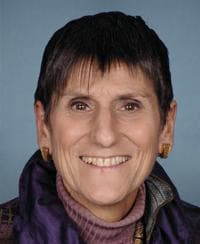
- Rosa DeLauro
- Cosponsors
- None
- Introduced
- In Committee
What this bill would do
The Physician Education for Fistula Treatment Act aims to provide assistance to train and retain obstetrician-gynecologists and urogynecology sub-specialists. This effort is intended to improve the quality of healthcare for women in least developed countries. The bill focuses on addressing childbirth-related injuries like obstetric fistula, which can be caused by prolonged, obstructed labor. To achieve this, the President will authorize assistance through the John E. Fogarty International Center for Advanced Study in the Health Sciences. A comprehensive 10-year strategy will be established to address the shortage of physicians in these regions.
Yes· 3 of 9
Would women be better off under this?+9
The bill directly addresses life-altering childbirth injuries and provides training to improve women's specialized health care.
Does this narrow the gap between how men and women are treated?+8
The bill targets the reduction of childbirth-related injuries that disproportionately affect women and girls.
Does this make health care easier to get in general?+7
The bill establishes training programs and care systems to improve access to specialized women's health care in least developed countries.
The opposite
No question was scored the opposite.
Who it would affect, and how
Potential Positive Impacts for People
-
Improved Medical Training and Specialized Care: The bill authorizes the establishment of fellowship and residency programs to support academic curricula for midwifery and specialized training for medical students and residents (Section 3(c)(1)). This helps develop expertise in geographical areas where childbirth-related injuries are most prevalent (Section 3(c)(1)(C)).
-
Addressing Physician Shortages: The creation of training centers is intended to address the shortage of OB-GYNs and sub-specialists in the urogynecology profession (Section 3(c)(2)(A)).
-
Enhanced Prevention and Treatment Systems: The 10-year strategy includes the development of systems of care that connect maternity care facilities with community education and local care (Section 4(b)(6)). This includes providing access to OB-GYNs, urogynecology care, or midwifery care (Section 4(b)(6)(B)).
-
Scientific and Social Research: The strategy mandates research into the prevention, repair, and rehabilitation of childbirth-related injuries (Section 4(b)(4)), as well as social science research to monitor factors contributing to these injuries (Section 4(b)(5)).
Potential Negative Impacts for People
- No specific negative impacts or burdens are explicitly mentioned in the provided text.
Groups and Interests Ranking
Every group the model scored this bill for, from -10 to +10. Hover a score for the reason it gave.
- Demographic And Interest Groups
- Good For Women+9Good For Low Income Households+6Good For Children+5
- Healthcare
- Improves Healthcare Access+7Increases Research Funding+6
- Social Issues And Justice
- Improves Gender Equality+8Improves Poverty Reduction+4
- National Security And Foreign Policy
- Increases Foreign Aid+7
- Education And Technology
- Improves College Affordability+5
- 5/22/2026
- Referred to the House Committee on Foreign Affairs.
- Introduced in House