Bill · H.R. 8966· House(119-HR-8966)
Subpoena Abuse Prevention Act
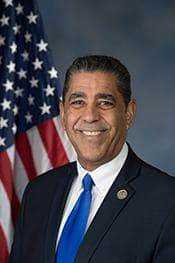
- Introduced
- 5/21/2026
- Last activity
- 5/21/2026 — Referred to the House Committee on the Judiciary.
- Sponsored by
- Adriano Espaillat
- Cosponsors
- - 1 - 2
- Introduced
- In Committee
What this bill would do
The Subpoena Abuse Prevention Act aims to change how the government uses administrative subpoenas to get customer records. It requires the government to identify specific subscribers and prohibits using subpoenas to investigate or retaliate against people for exercising their constitutional rights. Government entities must now provide a certification under penalty of perjury that the subpoena is for a lawful purpose. The bill also allows service providers to notify customers about subpoenas unless a court order says otherwise. Finally, federal entities must publicly report how many administrative subpoenas they use each year.
Yes· 3 of 9
Does this protect the individual right to speak freely?+8
Protects users from government surveillance when exercising free speech.
Does this protect people from being watched or searched?+8
Limits government access to private records and prohibits bulk data collection.
Does this protect what people are allowed to say in public life?+8
Prohibits the use of subpoenas to monitor or retaliate against the exercise of free speech and press.
The opposite
Does this give the government more power to monitor people inside the country?-7
Significantly restricts domestic surveillance capabilities via administrative subpoenas.
Does this give the federal government more power?-5
Decreases the power of federal entities to issue administrative subpoenas without strict certification.
Who it would affect, and how
Potential Positive Impacts for People
-
Protection of Constitutional Rights: The bill stops government entities from using subpoenas to monitor, investigate, or retaliate against people for exercising free speech, press, religion, assembly, or petition (Section 2(c)).
-
Ending Bulk Collection: By requiring the government to identify a subscriber by name, address, network address, or account identifier, the bill prevents the bulk collection of subscriber information (Section 2(b)).
-
Increased Accountability: Government officials must now certify under penalty of perjury that a subpoena is for a legitimate and lawful purpose (Section 2(c)).
-
Transparency for Consumers: Service providers are generally allowed to notify customers when a subpoena is received and can seek legal advice regarding it (Section 2(d)).
-
Public Oversight: Federal entities must publish annual reports showing the number of administrative subpoenas issued and the number of accounts affected (Section 2(e)).
Potential Negative Impacts for People
- Limited Notice in Certain Cases: If the government gets a preclusion of notice order, the right of a service provider to notify the customer can still be limited (Section 2(d)).
Groups and Interests Ranking
Every group the model scored this bill for, from -10 to +10. Hover a score for the reason it gave.
- Governance And Ideology
- Improves Freedom Of Speech+8Improves Privacy Rights+8Improves Government Transparency+6Improves Due Process+5Increases Federal Power-5
- Social Issues And Justice
- Improves Freedom Of Speech+8Improves Religious Freedom+6Improves Policing Reform+4
- Education And Technology
- Improves Data Privacy+7
- National Security And Foreign Policy
- Increases Domestic Surveillance-7
- Economy And Finance
- Improves Consumer Protection+3
- 5/21/2026
- Referred to the House Committee on the Judiciary.
- 3 Cosponsors added.
- Introduced in House
One bill Congress.gov lists as related to this one — companions in the other chamber, earlier versions, and bills this one absorbed or was folded into.
 Eric Burlison
Republican · Missouri
 Robin Kelly
Democrat · Illinois
 Thomas Massie
Republican · Kentucky