Bill · H.R. 896· House(119-HR-896)
Expanding Access to High-Impact Tutoring Act of 2025
- Introduced
- 1/31/2025
- Last activity
- 1/31/2025 — Referred to the House Committee on Education and Workforce.
- Sponsored by
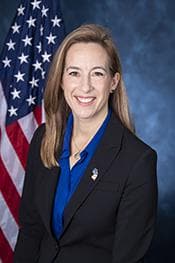
- Mikie Sherrill
- Cosponsors
- - 5 - 1
- Introduced
- In Committee
What this bill would do
This bill, titled the "Expanding Access to High-Impact Tutoring Act of 2025," directs the Secretary of Education to award grants to State educational agencies to fund tutoring programs for elementary and secondary students. These funds are intended to improve academic achievement and recovery based on state standards. A significant portion of the funding goes toward state grants, while other portions support a nationwide tutoring workforce, program evaluations, and an Advisory Board. Local educational agencies can receive subgrants to implement these programs, which must include specific tutoring hours and student-to-tutor ratios. The Act also establishes an Advisory Board to oversee program requirements, technical assistance, and the development of a tutoring workforce.
Yes· 3 of 6
Would children be better off under this?+8
The bill provides targeted academic support and tutoring for elementary and secondary students.
Would students be better off under this?+8
The bill aims to improve the academic achievement and recovery of elementary and secondary students.
Does this put more money into public schools?+8
The bill authorizes significant new grants for state and local educational agencies to fund tutoring programs.
The opposite
No question was scored the opposite.
Who it would affect, and how
Potential Positive Impacts for People
-
Improved Academic Performance: The bill aims to improve the academic achievement and recovery of students in elementary and secondary schools (Section 3(a)).
-
Targeted Support for High-Need Areas: Subgrant priority is given to local agencies based on the number of students eligible under title I and the level of academic decline since the COVID-19 public health emergency began (Section 4(b)).
-
Standardized Quality of Tutoring: The bill requires specific tutoring parameters, such as at least 30 minutes of tutoring per day for at least 3 days per week, to ensure consistent service (Section 4(c)(2)(D)(i) and Section 6(b)(1)(A)).
-
Workforce Development: The Act provides for the development of a nationwide tutoring workforce, including funding for recruiting and training teachers, paraprofessionals, and volunteers (Section 7(a) and Section 7(b)).
-
Career Pathways for Students: A pilot program is established to provide funding for the training and compensation of higher education graduates who commit to tutoring for at least 2 years (Section 7(b)(6)).
Potential Negative Impacts for People
-
Workplace and Labor Concerns: The implementation of these programs may affect the terms and conditions of employment for local educational agency employees, requiring bargaining or collaboration with educator unions (Section 4(c)(2)(J) and Section 8(a)).
-
Strict Funding Contingencies: Local educational agencies risk losing their annual fund allocations if their tutoring programs are determined to not be improving student outcomes (Section 4(d)(3)(B)(ii)).
-
Potential Loss of Funding for Poor Performance: If a local educational agency fails to improve student outcomes after submitting an updated plan, they can be declared ineligible to receive annual allocations for the remainder of the subgrant period (Section s 4(d)(3)(C)(ii)(II)(bb)).
Groups and Interests Ranking
Every group the model scored this bill for, from -10 to +10. Hover a score for the reason it gave.
- Demographic And Interest Groups
- Good For Children+8Good For Students+8Good For Low Income Households+7Good For Union Workers+3
- Education And Technology
- Increases Public School Funding+8
- Economy And Finance
- Increases Job Creation+5
- 4/7/2025
- 1 Cosponsor added.
- 2/6/2025
- 2 Cosponsors added.
- 1/31/2025
- Referred to the House Committee on Education and Workforce.
- 3 Cosponsors added.
- Introduced in House
 Donald Davis
Democrat · North Carolina
 Brian Fitzpatrick
Republican · Pennsylvania
 Josh Harder
Democrat · California
 David Scott
Democrat · Georgia
 Eric Sorensen
Democrat · Illinois
 Shri Thanedar
Democrat · Michigan