Bill · H.R. 8938· House(119-HR-8938)
Biotechnology Workforce Alignment Act of 2026
- Introduced
- 5/20/2026
- Last activity
- 5/20/2026 — Referred to the House Committee on Science, Space, and Technology.
- Sponsored by
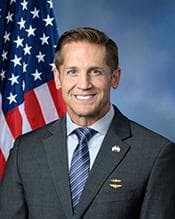
- Richard McCormick
- Cosponsors
- - 1 - 4
- Introduced
- In Committee
What this bill would do
This bill, titled the "Biotechnology Workforce Alignment Act of 2026," directs the Director of the National Science Foundation to support biotechnology workforce development. The Director is tasked with integrating Federal biotechnology research investments with workforce development activities. This includes identifying high-demand areas like biomanufacturing, synthetic biology, and bioinformatics. The Act also calls for creating workforce frameworks and supporting various educational and career pathways. Furthermore, the Director is expected to coordinate with the private sector and various institutions to align training with industry needs. Finally, the Director must submit regular reports to House and Senate committees regarding workforce gaps and outcomes.
Yes· 3 of 11
Would people in their twenties and thirties be better off under this?+5
The bill focuses on creating career pathways, internships, and apprenticeships for early-career researchers and students.
Would students be better off under this?+5
The bill specifically promotes educational pathways and hands-on training opportunities for students.
Is this likely to create jobs?+5
The bill supports the creation of career pathways and training for high-demand biotechnology sectors.
The opposite
No question was scored the opposite.
Who it would affect, and how
Potential Positive Impacts for People
-
Creation of Career Pathways: The Director will support educational and career pathways that include multiple entry and exit points for students and early-career researchers to obtain credentials and degrees (Section 2(b)(2)).
-
Hands-on Training Opportunities: The bill promotes participation in internships, apprenticeships, and cooperative education programs to provide practical experience (Section 2(b)(3)).
-
Support for Diverse Institutions: The Act supports partnerships involving various institutions, including community colleges and minority-serving institutions (Section 2(b)(4)).
-
Alignment with Industry Needs: By coordinating with private sector entities, the bill encourages the alignment of workforce training programs with evolving industry needs (Section 2(c)(1) and (3)).
-
Identification of High-Demand Areas: The Director will identify specific high-demand areas such as biomanufacturing, synthetic biology, bioinformatics, and regulatory science to guide workforce development (Section 2(a)(2)).
Potential Negative Impacts for People
- No specific negative impacts or burdens are explicitly mentioned in the provided text.
Groups and Interests Ranking
Every group the model scored this bill for, from -10 to +10. Hover a score for the reason it gave.
- Demographic And Interest Groups
- Good For Students+5Good For Young Adults+5Good For African Americans+4Good For Low Income Households+3
- Economy And Finance
- Increases Job Creation+5Improves Small Business Support+3
- Education And Technology
- Increases Scientific Research Funding+4Improves College Affordability+2
- Social Issues And Justice
- Improves Racial Equity+4
- Healthcare
- Improves Healthcare Access+2
- National Security And Foreign Policy
- Improves International Trade+2
- 8/13/2026
- 1 Cosponsor added.
- 6/30/2026
- 1 Cosponsor added.
- 6/25/2026
- 1 Cosponsor added.
- 6/3/2026
- 1 Cosponsor added.
- 5/20/2026
- Referred to the House Committee on Science, Space, and Technology.
- 1 Cosponsor added.
- Introduced in House
 Donald Davis
Democrat · North Carolina
 Pat Harrigan
Republican · North Carolina
 Ro Khanna
Democrat · California
 Sarah McBride
Democrat · Delaware
 Eugene Vindman
Democrat · Virginia