Bill · H.R. 8930· House(119-HR-8930)
Federal Biotechnology Workforce Assessment Act
- Introduced
- 5/20/2026
- Last activity
- 5/20/2026 — Referred to the House Committee on Oversight and Government Reform.
- Sponsored by
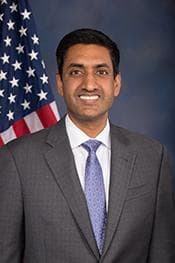
- Ro Khanna
- Cosponsors
- - 0 - 2
- Introduced
- In Committee
What this bill would do
The Federal Biotechnology Workforce Assessment Act directs the Director of the Office of Personnel Management to evaluate the biotechnology workforce within various Federal agencies. The Director must work with agency heads to identify current and future needs for biotechnology positions. This assessment includes analyzing required roles, necessary qualifications, and security clearance requirements. It also examines the feasibility of using new occupational codes and training existing employees. Additionally, the bill looks into mechanisms for accessing outside expertise and public-private talent exchanges. Finally, a report containing these findings must be submitted to the appropriate congressional committees within 180 days of enactment.
Yes· 3 of 9
Would business owners be better off under this?+3
The focus on public-private talent exchanges can create more opportunities for non-federal organizations to collaborate with the government.
Is this likely to create jobs?+3
The bill seeks to identify and plan for future biotechnology positions within several federal agencies.
Does this put more money into scientific research?+3
The bill supports the infrastructure for biotechnology by identifying workforce needs and training opportunities.
The opposite
No question was scored the opposite.
Who it would affect, and how
Potential Positive Impacts for People
-
Workforce Planning and Development: The assessment aims to identify the total number of biotechnology positions required now and over the next 10 years, which helps in planning for future needs (Section 3(b)(1)).
-
Employee Training Opportunities: The bill requires an assessment of how current employees can meet workforce needs through additional training, which could provide growth opportunities for existing staff (Section 3(b)(11)).
-
Expertise Access: The assessment seeks to identify ways for agencies to access outside expertise through prequalified pools of experts, which could provide agencies with necessary help on a temporary or intermittent basis (Section 3(b)(13)).
-
Talent Exchange Opportunities: The bill looks into using public-private talent exchanges, which involves the temporary assignment of employees between Federal and non-Federal organizations (Section 3(b)(14) and Section 2(6)).
Potential Negative Impacts for People
- Funding and Security Clearances: The assessment identifies if additional appropriations are required to obtain necessary security clearances, which implies there may be costs associated with these requirements (Section 3(b)(5) and Section 3(b)(6)).
Groups and Interests Ranking
Every group the model scored this bill for, from -10 to +10. Hover a score for the reason it gave.
- Demographic And Interest Groups
- Good For Business Owners+3Good For Union Workers+2
- Economy And Finance
- Increases Job Creation+3Improves Fiscal Responsibility+1
- Education And Technology
- Increases Scientific Research Funding+3
- Environment Energy And Infrastructure
- Improves Environmental Protections+2
- Governance And Ideology
- Improves Government Transparency+2
- Healthcare
- Improves Healthcare Access+2
- National Security And Foreign Policy
- Improves Cybersecurity Defense+2
- 5/20/2026
- Referred to the House Committee on Oversight and Government Reform.
- 2 Cosponsors added.
- Introduced in House
 Richard McCormick
Republican · Georgia
 Pete Sessions
Republican · Texas