Bill · H.R. 8916· House(119-HR-8916)
CHIERS Act of 2026
- Introduced
- 5/20/2026
- Last activity
- 5/20/2026 — Referred to the Committee on Energy and Commerce, and in addition to the Committee on Financial Services, for a period to be subsequently determined by the Speaker, in each case for consideration of such provisions as fall within the jurisdiction of the committee concerned.
- Sponsored by
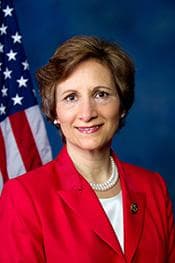
- Suzanne Bonamici
- Cosponsors
- - 0 - 2
- Introduced
- In Committee
What this bill would do
This bill directs the Secretary of Health and Human Services and the Secretary of Housing and Urban Development to jointly award grants to eligible entities. The purpose of these grants is to improve access to, develop, or expand transportation services for individuals with substance use disorder. These transportation services will get individuals to or from substance use disorder treatment or supportive services at no cost to the individual. Eligible entities include nonprofits, government entities, Indian Tribes, and health centers. The bill outlines specific permitted uses of funds, application requirements, and reporting duties for grantees.
Yes· 3 of 19
Does this do more about addiction and overdose deaths?+7
The legislation directly targets transportation barriers associated with substance use disorder treatment and opioid recovery services.
Would households on low incomes be better off under this?+6
The bill specifically targets residents of low-income communities and individuals experiencing homelessness for free transit assistance.
Does this make health care easier to get in general?+6
The bill directly improves healthcare and treatment access by providing free transportation for individuals with substance use disorders.
The opposite
No question was scored the opposite.
Who it would affect, and how
Potential Positive Impacts for People
-
Free transportation access: Section 2(a) provides that grants will be used to supply transportation, including first and last mile transportation, to or from substance use disorder treatment or supportive services at no cost to the covered individual. This helps people get the care they need without worrying about travel costs.
-
Flexible use for local needs: Section 2(b)(1) allows grant funds to be used for several practical purposes, such as providing prescheduled or on-demand rides, acquiring motor vehicles, paying for ridesharing or taxi services, and training personnel. This gives organizations the tools they need to reliably move people to their appointments.
-
Help for vulnerable populations: Section 2(h)(1) defines covered individuals to include people experiencing homelessness, those residing in low-income communities, and those living in communities where transportation is a barrier to health care. This ensures that the help is targeted directly to people who are struggling the most.
-
Potential Negative Impacts for People
-
Exclusion of involuntary treatment: Section 2(b)(2)(A) states that grant funds may not be used for transporting an individual to receive involuntary inpatient treatment. While this is a restriction, it means transport funds cannot be utilized for specific types of court-ordered or non-voluntary care scenarios.
- Law enforcement restriction: Section 2(b)(2)(B) prohibits law enforcement personnel from using grants awarded under this section. This means police or similar officials cannot use these specific funds to provide the transit services.
Groups and Interests Ranking
Every group the model scored this bill for, from -10 to +10. Hover a score for the reason it gave.
- Demographic And Interest Groups
- Good For Low Income Households+6Good For Middle Aged+3Good For Native Americans+3Good For Rural Residents+3Good For Young Adults+3Good For African Americans+2Good For Hispanic Americans+2Good For People With Disabilities+2Good For Urban Residents+2Good For Veterans+2
- Healthcare
- Improves Opioid Crisis Response+7Improves Healthcare Access+6
- Social Issues And Justice
- Improves Poverty Reduction+4Reduces Homelessness+3
- Environment Energy And Infrastructure
- Improves Public Transit+3Improves Rural Development+2
- Governance And Ideology
- Improves Government Transparency+1Increases Federal Power+1
- Economy And Finance
- Increases Job Creation+1
- 5/20/2026
- Referred to the Committee on Energy and Commerce, and in addition to the Committee on Financial Services, for a period to be subsequently determined by the Speaker, in each case for consideration of such provisions as fall within the jurisdiction of the committee concerned.
- 2 Cosponsors added.
- Introduced in House
 Don Bacon
Republican · Nebraska
 David Valadao
Republican · California