Bill · H.R. 8890· House(119-HR-8890)
Enhancing CLIA Act of 2026
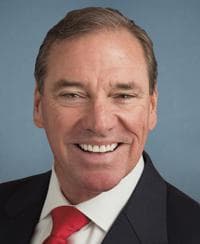
- Introduced
- 5/19/2026
- Last activity
- 5/19/2026 — Referred to the Committee on Energy and Commerce, and in addition to the Committee on Ways and Means, for a period to be subsequently determined by the Speaker, in each case for consideration of such provisions as fall within the jurisdiction of the committee concerned.
- Sponsored by
- Neal Dunn
- Cosponsors
- None
- Introduced
- In Committee
What this bill would do
This bill, known as the "Enhancing CLIA Act of 2026," seeks to amend the Public Health Services Act regarding the regulation of laboratory developed tests. It shifts the authority for regulating laboratory operations from the Federal Food, Drug, and Cosmetic Act to the Secretary under CLIA. The legislation establishes specific standards for analytical and clinical validity that laboratories must meet for their tests. It also creates a system for approved third parties to provide supplemental affirmations of a test's validity. Additionally, the bill mandates the creation of a centralized database for submitting information about these tests. Finally, it establishes new requirements for reporting serious harm or public health threats caused by inaccurate results.
Yes· 3 of 5
Does this make what the government does easier for the public to see?+4
The establishment of a centralized database provides a transparent interface for stakeholders to access information about laboratory developed tests.
Does this make health care easier to get in general?+3
By requiring analytical and clinical validity for laboratory developed tests, the bill aims to improve the accuracy of medical diagnoses.
Does this put more money into Medicare, the health coverage for people over 65?+2
The bill streamlines the process for national coverage determinations for laboratory developed tests via third-party affirmations.
The opposite
Does this make it easier to run a small business?-3
The bill imposes new compliance, reporting, and data submission costs on clinical laboratories.
Who it would affect, and how
Potential Positive Impacts for People
-
Ensuring Test Reliability: The bill requires laboratory developed tests to meet applicable standards for analytical and clinical validity, which means the tests must provide accurate and reliable information for their stated purpose (Section 2(a)(1)(B)).
-
Increased Transparency: The creation of a centralized database will allow for a transparent interface where stakeholders can access information submitted by laboratories regarding their tests (Section 2(a)(2)(C)(i)).
-
Faster Validation through Third Parties: Laboratories can obtain supplemental affirmations of validity from approved third parties, providing a way to demonstrate that their tests meet required standards (Section 2(a)(1)(D)).
-
Streamlined Use of Results: For national coverage determinations, a supplemental affirmation from an approved third party can be considered equivalent to FDA approval or clearance (Section 2(c)).
-
Enhanced Safety Monitoring: The bill requires laboratories to submit reports of inaccurate results that suggest serious harm or an imminent threat to public health, which helps track potential dangers (Section 2(a)(3)(B)).
-
Public Engagement and Feedback: The law mandates that the Centers for Medicare and Medicaid Services hold regular open door forums with clinical laboratories to discuss regulatory issues (Section 4(c)).
Potential Negative Impacts for People
-
New Compliance Burdens for Laboratories: Laboratories will be required to submit detailed information about their tests to a centralized database, including purposes, specimen types, and performance specifications (Section 2(a)(2)(A)).
-
Strict Reporting Requirements: Laboratories must report individual undetected inaccurate results that suggest serious harm or death within 5 calendar days, and submit quarterly reports for other instances of serious harm (Section 2(a)(3)(B)-(C)).
-
Mandatory Cease of Operations: If the Secretary determines a test does not meet required standards, the laboratory must stop performing that test until they receive confirmation that the issue is resolved (Section 2(a)(4)(F)).
-
Costs for FDA Review: Laboratories seeking supplemental affirmation from the Food and Drug Administration must pay a fee for such a review (Section 2(a)(1)(H)(iii)).
Groups and Interests Ranking
Every group the model scored this bill for, from -10 to +10. Hover a score for the reason it gave.
- Healthcare
- Improves Healthcare Access+3Improves Pandemic Preparedness+2Increases Medicare Funding+2
- Governance And Ideology
- Improves Government Transparency+4
- Economy And Finance
- Improves Small Business Support-3
- Demographic And Interest Groups
- Good For Veterans+1
- 5/19/2026
- Referred to the Committee on Energy and Commerce, and in addition to the Committee on Ways and Means, for a period to be subsequently determined by the Speaker, in each case for consideration of such provisions as fall within the jurisdiction of the committee concerned.
- Introduced in House