Bill · H.R. 8872· House(119-HR-8872)
Preventing Waste, Fraud, and Abuse in TANF Act
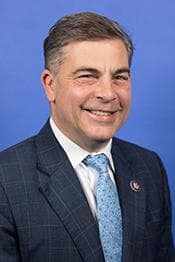
- Introduced
- 5/19/2026
- Last activity
- 6/3/2026 — POSTPONED PROCEEDINGS - Pursuant to clause 1(c) of rule XIX, the Chair announced further proceedings on H.R. 8872 is postponed.
- Sponsored by
- Mike Carey
- Cosponsors
- - 8 - 0
- Introduced
What this bill would do
This bill, known as the "Preventing Waste, Fraud, and Abuse in TANF Act," aims to amend the Social Security Act regarding temporary assistance for needy families. It focuses on targeting funds toward low-income families and strengthening integrity guardrails for how States spend money. The legislation requires the measurement of improper payments and sets goals to eliminate fraud. It also establishes specific deadlines for States to obligate and expend their funds. Additionally, the bill prohibits States from using federal funds to replace their own state spending.
Yes· 3 of 4
Would households on low incomes be better off under this?+5
The bill ensures funds are strictly used for families meeting specific low-income thresholds.
Is this likely to lift people out of poverty?+4
The bill mandates that assistance be targeted to families earning less than twice the federal poverty guidelines.
Does this make what the government does easier for the public to see?+3
The bill requires a report to Congress containing a plan to reduce or eliminate improper payments.
The opposite
Does this leave more decisions to the states?-3
The bill imposes new federal mandates on how states must obligate, expend, and reserve TANF funds.
Who it would affect, and how
Potential Positive Impacts for People
-
Targeting Assistance to Low-Income Families: The bill requires that grant funds be used only for assistance or services for families whose income is less than twice the poverty guidelines (Section 3). This ensures funds are directed toward those meeting specific financial needs.
-
Reduction of Waste and Fraud: By applying the Payment Integrity Information Act of 2019 and requiring a plan to reduce or eliminate improper payments within 10 years, the bill seeks to improve program integrity (Section 2).
-
Prevention of Fund Diversion: The bill mandates that federal funds must supplement, rather than replace, existing state and local funds (Section 5). This ensures that federal money is used to add to, not subtract from, current state and local support for these programs.
Potential Negative Impacts for People
-
Restrictions on Fund Usage: States are limited in how they can reserve money for future use, with a cap of 15 percent of a fiscal year's funds and a total reserve limit of 50 percent of the previous year's total payment (Section 4). This could limit a State's ability to save funds for future programmatic needs.
-
Strict Expenditure Dead-lines: The bill requires States to obligate funds by the end of the succeeding fiscal year and expend them by the end of the 2nd succeeding fiscal year (Section 4). This mandate imposes specific timelines on how States must manage their budgets.
Groups and Interests Ranking
Every group the model scored this bill for, from -10 to +10. Hover a score for the reason it gave.
- Demographic And Interest Groups
- Good For Low Income Households+5
- Social Issues And Justice
- Improves Poverty Reduction+4
- Economy And Finance
- Reduces Government Spending+1
- Governance And Ideology
- Improves Government Transparency+3Increase States Rights-3
| Updated | Bill | Title | Policy Area |
|---|---|---|---|
| 4 months ago | On agreeing to the Rules amendment (A001) Agreed to without objection. |
- 6/3/2026
- POSTPONED PROCEEDINGS - Pursuant to clause 1(c) of rule XIX, the Chair announced further proceedings on H.R. 8872 is postponed.
- The previous question was ordered pursuant to the rule.
- DEBATE - The House proceeded with one hour of debate on H.R. 8872.
- Rule provides for consideration of H.R. 8646, H.R. 7726, H.R. 7892 and H.R. 8872. The resolution provides for consideration of H.R. 8646 under a structured rule and H.R. 7726, H.R. 7892, and H.R. 8872 under a closed rule, with one hour of general debate on each bill. The resolution provides for one motion to recommit on each bill.
- Considered under the provisions of rule H. Res. 1333. (consideration: CR H3805-3810; text of amendment in the nature of a substitute: CR H3805-3806)
- Rule H. Res. 1333 passed House.
- Rules Committee Resolution H. Res. 1333 Reported to House. Rule provides for consideration of H.R. 8646, H.R. 7726, H.R. 7892 and H.R. 8872. The resolution provides for consideration of H.R. 8646 under a structured rule and H.R. 7726, H.R. 7892, and H.R. 8872 under a closed rule, with one hour of general debate on each bill. The resolution provides for one motion to recommit on each bill.
- 5/29/2026
- Reported (Amended) by the Committee on Ways and Means. H. Rept. 119-670.
- Placed on the Union Calendar, Calendar No. 584.
- 5/21/2026
- Committee Consideration and Mark-up Session Held
- Ordered to be Reported in the Nature of a Substitute by the Yeas and Nays: 23 - 19.
- 5/20/2026
- 3 Cosponsors added.
- 5/19/2026
- Referred to the House Committee on Ways and Means.
- 5 Cosponsors added.
- Introduced in House
3 bills Congress.gov lists as related to this one — companions in the other chamber, earlier versions, and bills this one absorbed or was folded into.
- 119-HR-2242: Eliminating Fraud and Improper Payments in TANF Act
- 119-HR-2359: Improve Transparency and Stability for Families and Children Act
- 119-HRES-1333: Providing for consideration of the bill (H.R. 8646) making appropriations for Agriculture, Rural Development, Food and Drug Administration, and Related Agencies programs for the fiscal year ending September 30, 2027, and for other purposes; providing for consideration of the bill (H.R. 7726) to amend the Child Care and Development Block Grant Act of 1990 to withhold funds from noncompliant States under such Act; providing for consideration of the bill (H.R. 7892) to amend the Higher Education Act of 1965 to require to the Secretary of Education to use an identity fraud detection system to review each FAFSA to determine whether the FAFSA presents a reasonable suspicion of identity fraud; and providing for consideration of the bill (H.R. 8872) to amend part A of title IV of the Social Security Act to target funds to low-income families, strengthen program integrity guardrails for State expenditure of funds, require measurement of improper payments, and establish goals for eliminating fraud and improper payments under the program of block grants to States for temporary assistance for needy families, and for other purposes.
 Jodey Arrington
Republican · Texas
 Aaron Bean
Republican · Florida
 Randy Feenstra
Republican · Iowa
 Carol Miller
Republican · West Virginia
 Blake Moore
Republican · Utah
 Max Miller
Republican · Ohio
 Adrian Smith
Republican · Nebraska
 Claudia Tenney
Republican · New York