Bill · H.R. 8836· House(119-HR-8836)
Know Your American Customer Act
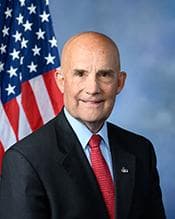
- Introduced
- 5/14/2026
- Last activity
- 5/14/2026 — Referred to the House Committee on Financial Services.
- Sponsored by
- Keith Self
- Cosponsors
- None
- Introduced
- In Committee
What this bill would do
The Know Your American Customer Act seeks to amend title 31 of the United States Code. This bill requires certain financial institutions, such as insured depository institutions and credit unions, to verify the citizenship and legal status of individuals seeking to open or maintain accounts. It establishes specific documentation requirements for new accounts and mandates that those with temporary authorized stays provide specific certifications. If an individual's legal status expires, the bill requires institutions to restrict account transactions and potentially close the account. The act also introduces civil penalties for institutions that fail to comply and criminal penalties for certain individuals.
Yes
Does this give the federal government more power?+5
The bill grants the Treasury Department and FinCEN new authority to regulate financial institution verification and account closures.
Does this tighten control of the border?+2
The bill increases domestic oversight of financial access for non-citizens based on their legal presence.
The opposite· 3 of 7
Would immigrants be better off under this?-8
The bill imposes severe criminal penalties, fines, and the risk of account loss on individuals not currently documented as lawfully present.
Would households on low incomes be better off under this?-5
The threat of account closure and restricted transaction ability disproportionately impacts low-income individuals with temporary status.
Would Hispanic Americans be better off under this?-5
The mandate for verifying legal presence and the threat of criminal penalties can heavily impact the large Hispanic immigrant population.
Who it would affect, and how
Potential Positive Impacts for People
-
Protection for individuals with expiring status: Individuals with a temporary period of authorized stay are granted a 30-day period of full access to their accounts after their status expires before transactions are restricted (Section 2, paragraph 2, subclause C, ii, I).
-
Access to funds during restricted periods: Even when an account is restricted due to expired status, covered institutions are still required to permit incoming deposits, direct deposits, and other credits to the account (Section s 2, paragraph 2, subclause C, ii, II, aa).
-
Restoration of account access: Individuals can regain full access to their accounts if they provide updated documentation of their lawful presence during the 30-day or 60-day window (Section 2, paragraph 2, subclause C, ii, III).
-
Safe harbors for financial institutions: Financial institutions are protected from civil penalties if they make a good-faith effort to comply or rely on specific accepted documents, such as a driver's license or passport (Section 2, paragraph 4, subclause B).
Potential Negative Impacts for People
-
Account restrictions and transaction bans: Individuals whose authorized stay expires may find their ability to withdraw money, use debit or credit cards, or perform wire transfers prohibited for a period of 60 days (Section 2, paragraph 2, subclause C, ii, II, bb).
-
Risk of account closure: If an individual cannot provide updated documentation of lawful presence before the end of the 60-day restricted period, their account must be closed (Section 2, paragraph 2, subclause C, iii).
-
Criminal penalties for individuals: Individuals who are not lawfully present or have had removal orders against them may face fines of up to $1,000,000 and imprisonment for up to 1 year for opening or maintaining an active account at a covered institution (Section 3, paragraph 2, subclause A).
-
Criminal penalties for using legal entities: Individuals who are not lawfully present may face fines of up to $1,000,000 and imprisonment for up to 1 year if they open or maintain an account through a legal entity (Section 3, paragraph 3).
Groups and Interests Ranking
Every group the model scored this bill for, from -10 to +10. Hover a score for the reason it gave.
- Demographic And Interest Groups
- Good For Immigrants-8Good For Hispanic Americans-5Good For Low Income Households-5
- Social Issues And Justice
- Improves Border Security+2Improves Poverty Reduction-5Improves Racial Equity-4
- Economy And Finance
- Improves Consumer Protection-3
- Governance And Ideology
- Increases Federal Power+5Improves Privacy Rights-4
- 5/14/2026
- Referred to the House Committee on Financial Services.
- Introduced in House
One bill Congress.gov lists as related to this one — companions in the other chamber, earlier versions, and bills this one absorbed or was folded into.