Bill · H.R. 883· House(119-HR-883)
Counter SNIPER Act
- Introduced
- 1/31/2025
- Last activity
- 1/31/2025 — Referred to the House Committee on the Judiciary.
- Sponsored by
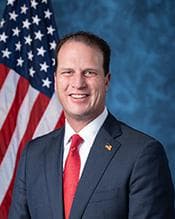
- August Pfluger
- Cosponsors
- - 3 - 0
- Introduced
- In Committee
What this bill would do
This bill, known as the "Counter SNIPER Act," aims to change how presidential and vice presidential candidates interact with the Secretary of Homeland Security regarding protective details. It requires the Secretary to provide a written justification if a candidate is denied requested protection or an increase in resources. Candidates would also have the right to request a reconsideration of such decisions. Additionally, the bill mandates that the Director of the United States Secret Service must be appointed by the President with the advice and consent of the Senate.
Yes
Does this make what the government does easier for the public to see?+5
The bill mandates written explanations and timelines for decisions regarding candidate protection requests.
Does this give the federal government more power?+2
The bill expands Senate oversight by requiring advice and consent for the appointment of the Secret Service Director.
The opposite
No question was scored the opposite.
Who it would affect, and how
Potential Positive Impacts for People
-
Increased Transparency for Candidates: If the Secretary of Homeland Security denies a request for a protective detail or more resources, they must provide a written notice explaining exactly which criteria the candidate failed to meet (Section 2, paragraph h(1)).
-
Right to Appeal: Candidates have a mechanism to challenge decisions by submitting a written request for reconsideration, which allows them to present facts to prove they meet the necessary criteria (Section 2, paragraph h(2)).
-
Timely Decision Making: The bill establishes strict timelines, requiring the Secretary to provide the initial written determination within 14 days of a request and a final determination within 14 days of a reconsideration request (Section 2, paragraph h(1) and h(3)).
-
Senate Oversight of Secret Service Leadership: The bill requires that the Director of the United States Secret Service be appointed with the advice and consent of the Senate, rather than just being appointed by the President (Section 2, paragraph h(i)).
Potential Negative Impacts for People
- No specific negative impacts are explicitly detailed in the provided text.
Groups and Interests Ranking
Every group the model scored this bill for, from -10 to +10. Hover a score for the reason it gave.
- Governance And Ideology
- Improves Government Transparency+5Increases Federal Power+2
- 9/2/2025
- 1 Cosponsor added.
- 2/6/2025
- 1 Cosponsor added.
- 1/31/2025
- Referred to the House Committee on the Judiciary.
- 1 Cosponsor added.
- Introduced in House
 Michael Guest
Republican · Mississippi
 Carlos Gimenez
Republican · Florida
 Abraham Hamadeh
Republican · Arizona