Bill · H.R. 8818· House(119-HR-8818)
End Fentanyl Trafficking with Local Task Forces Act of 2026
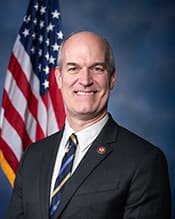
- Introduced
- 5/14/2026
- Last activity
- 5/14/2026 — Referred to the House Committee on the Judiciary.
- Sponsored by
- Rick Larsen
- Cosponsors
- - 1 - 2
- Introduced
- In Committee
What this bill would do
This bill, known as the "End Fentanyl Trafficking with Local Task Forces Act of 2026," establishes a grant program to combat opioid trafficking. The COPS Director is authorized to provide grants to various entities, including States, local governments, and Indian Tribes. These funds are intended for locating, investigating, and interdicting illicit activities related to opioid distribution. Funds can be used for hiring and training law enforcement, establishing task forces, and procuring equipment. The bill mandates that at least 20 percent of the funds be reserved for Indian Tribes and multi-jurisdictional task forces. It also authorizes $70,000,000 for each fiscal year from 2027 through 2031.
Yes· 3 of 6
Does this do more about addiction and overdose deaths?+7
The bill establishes a grant program specifically to locate, investigate, and interdict the distribution of opioids.
Would Native Americans be better off under this?+6
The bill mandates that at least 20 percent of grant funds be reserved for Indian Tribes and Tribal law enforcement agencies.
Does this change how police departments operate?+3
The bill provides funds for training and establishing multi-jurisdictional task forces to combat drug trafficking.
The opposite
Does this reduce what the federal government spends?-1
The bill authorizes $70,000,000 in new federal spending annually for the grant program.
Who it would affect, and how
Potential Positive Impacts for People
-
Enhanced Law Enforcement Capabilities: Grants can be used to hire and train law enforcement officers and employees, or to procure equipment and technology to help locate and interdict opioid distribution (Section 2(a), subsection (d)).
-
Support for Local and Tribal Communities: The bill reserves at least 20 percent of the funds for direct grants to Indian Tribes, Tribal law enforcement agencies, and multi-jurisdictional task forces (Section 2(a), subsection (f)(1)).
-
Strengthened Cooperation: Priority is given to applicants who use funds to establish or expand multi-jurisdictional task forces or regional consortia (Section 2(a), subsection (j)).
-
Expertise and Instruction: The COPS Director may provide technical assistance, which can include the operation of training centers to provide instruction and seminars for law enforcement personnel (Section 2(a), subsection (i)(2)).
Potential Negative Impacts for People
- Administrative Burden: While the bill directs the COPS Director to streamline the process, applicants are still required to submit detailed explanations of fund use, maintain specific data and records, and provide certifications (Section 2(a), subsection (c)).
Groups and Interests Ranking
Every group the model scored this bill for, from -10 to +10. Hover a score for the reason it gave.
- Demographic And Interest Groups
- Good For Native Americans+6Good For Low Income Households+2Good For Veterans+1
- Healthcare
- Improves Opioid Crisis Response+7
- Social Issues And Justice
- Improves Policing Reform+3
- Economy And Finance
- Increases Job Creation+3Reduces Government Spending-1
- 5/21/2026
- 1 Cosponsor added.
- 5/14/2026
- Referred to the House Committee on the Judiciary.
- 2 Cosponsors added.
- Introduced in House
One bill Congress.gov lists as related to this one — companions in the other chamber, earlier versions, and bills this one absorbed or was folded into.
 Brian Fitzpatrick
Republican · Pennsylvania
 Marie Perez
Democrat · Washington
 Dan Newhouse
Republican · Washington