Bill · H.R. 8797· House(119-HR-8797)
Army Organic Industrial Base Mineral Partnerships Act of 2026
- Introduced
- 5/13/2026
- Last activity
- 5/13/2026 — Referred to the House Committee on Armed Services.
- Sponsored by
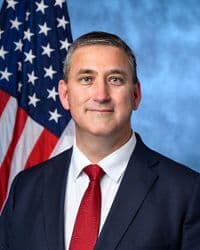
- Nathaniel Moran
- Cosponsors
- - 1 - 0
- Introduced
- In Committee
What this bill would do
The Army Organic Industrial Base Mineral Partnerships Act of 2026 aims to amend title 10 of the United States Code. It seeks to authorize cooperative partnerships between the Army and non-Army entities for mineral extraction activities. These operations can occur at Army organic industrial base facilities using land, infrastructure, or waste streams under Army control. The bill establishes specific rules regarding environmental responsibilities and how the Army receives compensation. It also details how received funds can be used to support Army industrial facilities. Finally, the Secretary of the Army is required to submit annual reports to Congress regarding these arrangements.
Yes· 3 of 5
Would business owners be better off under this?+2
The bill creates opportunities for companies to engage in mineral extraction through partnerships with the Army.
Does this better protect air, water and wildlife?+1
The bill requires non-Army entities to be responsible for environmental compliance and remediation under applicable laws.
Does this repair or build roads and bridges?+1
The bill allows received funds to be used for capital investments and military construction projects that support the organic industrial base.
The opposite
No question was scored the opposite.
Who it would affect, and how
Potential Positive Impacts for People
-
Industrial Base Modernization: The bill allows the Army to receive consideration in the form of equipment, tooling, or production capability enhancements to support the mission and modernization of the organic industrial base (Section 2(i)(2)(B)(iii)).
-
Facility Support and Maintenance: Cash payments received from mineral extraction may be used for the operation, maintenance, modernization, or environmental remediation of Army industrial facilities (Section 2(i)(2)(C)).
-
Infrastructure Investment: For facilities financed through the Army Working Capital Fund, cash amounts can be used for capital investments, including military construction projects, that directly support the organic industrial base (Section 2(i)(2)(E)(ii)).
Potential Negative Impacts for People
-
Environmental Liability Risks: While the bill requires non-Army entities to be responsible for environmental compliance, it notes that these entities must handle responsibility for contamination discovered after the termination of a contract or contamination that migrates beyond the facility boundaries (Section 2(i)(1)(B)(i)).
-
Financial Risk of Default: The bill acknowledges the risk that a non-Army entity could face default, insolvency, or bankruptcy, which necessitates the requirement for financial assurances like insurance or performance bonding to protect the United States (Section 2(i)(1)(B)(iii)).
Groups and Interests Ranking
Every group the model scored this bill for, from -10 to +10. Hover a score for the reason it gave.
- Demographic And Interest Groups
- Good For Business Owners+2
- Environment Energy And Infrastructure
- Improves Environmental Protections+1Improves Roads And Bridges+1
- Economy And Finance
- Improves Small Business Support+1
- National Security And Foreign Policy
- Improves Veterans Benefits+1
- 7/20/2026
- 1 Cosponsor added.
- 5/13/2026
- Referred to the House Committee on Armed Services.
- Introduced in House
One bill Congress.gov lists as related to this one — companions in the other chamber, earlier versions, and bills this one absorbed or was folded into.
 Pat Fallon
Republican · Texas