Bill · H.R. 8783· House(119-HR-8783)
To amend the Internal Revenue Code of 1986 to exclude from gross income charitable distributions from certain employer-sponsored retirement plans, and for other purposes.
- Introduced
- 5/13/2026
- Last activity
- 5/13/2026 — Referred to the House Committee on Ways and Means.
- Sponsored by
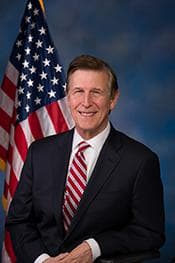
- Donald Beyer
- Cosponsors
- - 1 - 1
- Introduced
- In Committee
What this bill would do
This bill proposes to amend the Internal Revenue Code of 1986 regarding retirement plan distributions. It seeks to exclude certain charitable distributions from an individual's gross income. These distributions must be made from a qualified employer plan directly to specific organizations. To qualify, the individual must have reached the age of 70\1/2. The bill also extends these rules to certain annuity contracts and deferred compensation plans.
Yes
Would people over 65 be better off under this?+5
The bill provides a specific tax benefit for charitable giving once individuals reach the age of 70 and a half.
Would retired people be better off under this?+5
The bill enhances the ability of retirees to make direct charitable contributions from their employer-sponsored plans without increasing taxable income.
Would high-income households be better off under this?+3
The bill allows for tax-advantaged charitable giving from various employer-sponsored retirement plans.
The opposite
Does this raise taxes on the highest earners?-1
The bill provides a tax exclusion for charitable distributions which may benefit high-income individuals with significant retirement accounts.
Does this reduce what the federal government spends?-1
The tax exclusion reduces potential federal tax revenue by allowing retirement distributions to be excluded from gross income.
Who it would affect, and how
Potential Positive Impacts for People
-
Tax Exclusion for Charitable Giving: Under Section 1(a)(1), the aggregate amount of qualified charitable distributions will not be included in a taxpayer's gross income, up to an applicable amount. This allows individuals to support organizations without increasing their taxable income.
-
Support for Specific Organizations: Section 1(a)(2)(A) allows distributions to be made to organizations described in section 170(b)(1)(A). This facilitates direct giving from employer-sponsored plans to various charitable entities.
-
Inclusion of Various Retirement Plans: Section 1(b), 1(c), and 1(d) expand the application of these rules to SEPs, SIMPLEs, 403(b) plans, and 457(b) plans. This ensures a wider variety of retirement accounts can be used for these tax-advantaged charitable distributions.
Potential Negative Impacts for People
-
Age Requirements: Per Section 1(a)(2)(B), a distribution is only considered a qualified charitable distribution if it is made on or after the date the individual reaches age 70\1/2. This limits the ability of younger individuals to utilize these specific tax benefits for charitable giving.
-
Organization Restrictions: Section 1(a)(2)(A) notes that the distribution cannot be made to organizations described in section 509(a)(3) or certain funds or accounts described in section 4966(d)(2). This restricts the types of charitable organizations that can receive these specific direct distributions.
-
Income Limits: Section 1(a)(1) and 1(a)(4)(A) establish that the exclusion from gross income is limited to an "applicable amount," which is calculated based on existing dollar amounts under section 408(d)(8). This means there is a cap on how much can be excluded from gross income.
Groups and Interests Ranking
Every group the model scored this bill for, from -10 to +10. Hover a score for the reason it gave.
- Demographic And Interest Groups
- Good For Retirees+5Good For Seniors+5Good For High Income Households+3
- Economy And Finance
- Increases Wealthy Taxes-1Reduces Government Spending-1
- 8/31/2026
- 1 Cosponsor added.
- 5/13/2026
- Referred to the House Committee on Ways and Means.
- 1 Cosponsor added.
- Introduced in House
One bill Congress.gov lists as related to this one — companions in the other chamber, earlier versions, and bills this one absorbed or was folded into.
 Kathy Castor
Democrat · Florida
 Mike Kelly
Republican · Pennsylvania