Bill · H.R. 8698· House(119-HR-8698)
Lower Prices at the Pump Act
- Introduced
- 5/7/2026
- Last activity
- 5/7/2026 — Referred to the Committee on Energy and Commerce, and in addition to the Committee on Education and Workforce, for a period to be subsequently determined by the Speaker, in each case for consideration of such provisions as fall within the jurisdiction of the committee concerned.
- Sponsored by
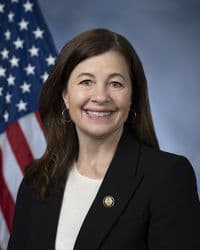
- Kristen McDonald Rivet
- Cosponsors
- - 2 - 0
- Introduced
- In Committee
What this bill would do
The "Lower Prices at the Pump Act" aims to protect consumers from price gouging on gasoline and other petroleum distillates. It prohibits selling these fuels at unconscionably excessive prices that take advantage of circumstances related to military operations against Iran. This prohibition lasts from the time of enactment until the President certifies that those military operations have ceased and the Strait of Hormuz is fully open. The law empowers the Federal Trade Commission and State officials to enforce these rules. Violators could face significant fines, with penalties being deposited into a Consumer Relief Trust Fund.
Yes· 3 of 6
Does this give people more protection from unfair business practices?+7
The bill prohibits unconscionably excessive gasoline pricing and empowers the FTC and State officials to take legal action against price gouging.
Would households on low incomes be better off under this?+6
The bill provides direct assistance via the Low Income Home Home Energy Assistance Program using penalty funds.
Is this likely to lift people out of poverty?+4
The bill creates a Consumer Relief Trust Fund to provide assistance through energy assistance and weatherization programs.
The opposite
No question was scored the opposite.
Who it would affect, and how
Potential Positive Impacts for People
-
Protection from unfair pricing: The bill prohibits the sale of gasoline or petroleum distillates at prices that are unconscionably excessive or take unfair advantage of the conflict with Iran (Section 2(a)).
-
Consumer assistance through relief funds: Penalties collected from violators will be deposited into a Consumer Relief Trust Fund to provide assistance via the Low Income Home Energy Assistance Program and the Weatherization Assistance Program (Section 3(d) and 3(e)).
-
State-level consumer protection: State attorneys general and officials have the authority to bring civil actions to enjoin unfair practices, enforce compliance, or obtain damages and restitution for residents (Section 3(b)(1)).
-
Targeted enforcement against large companies: The Department of Justice is directed to prioritize enforcement actions against companies with annual gasoline or petroleum distillate sales exceeding $10,000,000,000 (Section 3(c)(2)).
Potential Negative Impacts for People
-
Strict pricing constraints: The bill prohibits prices that reflect additional costs or additional risks taken by the seller to produce, distribute, or obtain the fuel (Section 2(c)(1)(C)).
-
Heavy financial penalties for businesses: Individuals or entities found in violation of the act can face criminal fines of up to $500,000,000 (Section 3(c)(1)).
Groups and Interests Ranking
Every group the model scored this bill for, from -10 to +10. Hover a score for the reason it gave.
- Demographic And Interest Groups
- Good For Low Income Households+6Good For Middle Class Households+3
- Economy And Finance
- Improves Consumer Protection+7
- Social Issues And Justice
- Improves Poverty Reduction+4
- Environment Energy And Infrastructure
- Improves Environmental Protections+3
- Governance And Ideology
- Improves Government Transparency+2
- 8/13/2026
- 1 Cosponsor added.
- 5/7/2026
- Referred to the Committee on Energy and Commerce, and in addition to the Committee on Education and Workforce, for a period to be subsequently determined by the Speaker, in each case for consideration of such provisions as fall within the jurisdiction of the committee concerned.
- 1 Cosponsor added.
- Introduced in House
 Kim Schrier
Democrat · Washington
 Gabe Vasquez
Democrat · New Mexico