Bill · H.R. 8656· House(119-HR-8656)
Ballistic Armor Made in America Act of 2026
- Introduced
- 5/4/2026
- Last activity
- 5/4/2026 — Referred to the House Committee on the Judiciary.
- Sponsored by
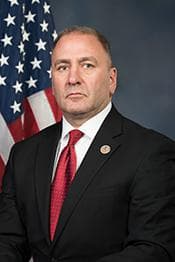
- Clay Higgins
- Cosponsors
- - 5 - 1
- Introduced
- In Committee
What this bill would do
This bill, known as the "Ballistic Armor Made in America Act of 2026," requires the Department of Justice to prioritize domestic production of body armor. It mandates that the National Institute of Justice require manufacturers to disclose where ballistic fibers are grown, produced, or recycled. It also prohibits the use of "Made in America" markings for products using foreign fibers. The Attorney General is prohibited from using Department of Justice funds to buy body armor containing fibers produced outside the United States, unless certain exceptions apply. Finally, the bill includes provisions for training regarding these disclosure requirements.
Yes· 3 of 7
Does this make what the government does easier for the public to see?+6
The bill requires the National Institute of Justice to publish specific disclosures regarding the origin of ballistic fibers for compliant products.
Is this likely to create jobs?+5
The mandate for domestic sourcing of ballistic fibers is likely to stimulate employment in the American manufacturing sector.
Would union members be better off under this?+5
Increased domestic manufacturing requirements typically lead to more domestic industrial jobs for workers.
The opposite
No question was scored the opposite.
Who it would affect, and how
Potential Positive Impacts for People
-
Increased Transparency: Under Section 2(a)(1), manufacturers must disclose the specific countries where ballistic fibers are grown, reprocessed, reused, recycled, or produced, providing more information to the public and agencies.
-
Protection of Domestic Branding: Section 2(a)(3) ensures that products using foreign fibers cannot use any markings or language related to the "Made in America" designation, protecting the integrity of that label.
-
Support for Domestic Manufacturing: Section 2(b)(1) prohibits the Attorney General from using funds for body armor that contains fibers produced outside of the United States, which encourages sourcing from within the country.
-
Educational Resources: Section 2(c) directs the Federal Law Enforcement Training Centers to provide an educational training program for state or local governmental entities regarding the disclosure requirements.
Potential Negative Impacts for People
-
Procurement Restrictions: Under Section 2(b)(1), the Attorney General is prohibited from using funds for certain body armor, which could impact the availability of gear unless the exceptions in Section 2(b)(2) are met.
-
Exceptions for Cost and Availability: Section 2(b)(2) allows for an exception to the domestic requirement if the Attorney General determines that domestic fibers cannot be procured as and when needed at United States market prices.
Groups and Interests Ranking
Every group the model scored this bill for, from -10 to +10. Hover a score for the reason it gave.
- Economy And Finance
- Increases Job Creation+5Improves Economic Growth+3Improves Small Business Support+2
- Demographic And Interest Groups
- Good For Union Workers+5Good For Business Owners+4
- Governance And Ideology
- Improves Government Transparency+6
- National Security And Foreign Policy
- Improves Veterans Benefits+2
- 6/18/2026
- 1 Cosponsor added.
- 5/20/2026
- 1 Cosponsor added.
- 5/12/2026
- 1 Cosponsor added.
- 5/7/2026
- 1 Cosponsor added.
- 5/4/2026
- Referred to the House Committee on the Judiciary.
- 2 Cosponsors added.
- Introduced in House
 Sheri Biggs
Republican · South Carolina
 Donald Davis
Democrat · North Carolina
 Wesley Hunt
Republican · Texas
 Pat Harrigan
Republican · North Carolina
 John Moolenaar
Republican · Michigan
 Gregory Murphy
Republican · North Carolina