Bill · H.R. 8577· House(119-HR-8577)
Disaster Declaration Transparency Act of 2026
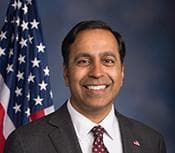
- Introduced
- 4/29/2026
- Last activity
- 4/29/2026 — Referred to the Committee on Transportation and Infrastructure, and in addition to the Committee on Rules, for a period to be subsequently determined by the Speaker, in each case for consideration of such provisions as fall within the jurisdiction of the committee concerned.
- Sponsored by
- Raja Krishnamoorthi
- Cosponsors
- - 2 - 0
- Introduced
- In Committee
What this bill would do
The Disaster Declaration Transparency Act of 2026 establishes a procedure for Congress to reverse a President's decision not to declare a major disaster. This applies when a Governor requests a declaration and the President declines it contrary to a FEMA Administrator recommendation or established precedent. The President must provide a written explanation for such a refusal to Congressional leadership within 24 hours. Congress can then introduce a specific joint resolution to mandate the declaration. The bill outlines strict, expedited legislative processes for both the House and Senate to consider and pass these resolutions.
Yes· 3 of 4
Does this improve help for people hit by a disaster?+6
The bill provides an expedited legislative path to mandate disaster declarations when the President has refused them against FEMA recommendations.
Does this make what the government does easier for the public to see?+5
The bill requires the President to provide a written explanation for refusing a disaster declaration within 24 hours.
Would people in cities be better off under this?+3
Increased likelihood of disaster declarations may provide more support to urban areas facing major disasters.
The opposite
No question was scored the opposite.
Who it would affect, and how
Potential Positive Impacts for People
-
Increased Accountability for Presidential Decisions: The bill requires the President to submit a written explanation to the Speaker of the House and the President of the Senate within 24 hours of a "covered refusal" (Section 2(d)(2)). This ensures that when a President denies a disaster request, they must provide a formal reason for the decision.
-
Empowered Congressional Oversight: Congress is given a specific mechanism through a "covered joint resolution" to overturn a President's refusal to declare a major disaster (Section 2(e)(1)). This provides a pathway for elected officials to act if they believe a disaster declaration is necessary despite a presidential refusal.
-
Streamlined Legislative Process: The bill implements expedited procedures, such as discharging resolutions from committees within 2 calendar days, to ensure that disaster-related matters are handled quickly (Section s 2(e)(3)(A) and 2(e)(4)(A)).
Potential Negative Impacts for People
-
Limited Legislative Flexibility: Once a "covered joint resolution" is introduced, it cannot be amended in the House of Representatives (Section 2(e)(3)(D)), nor can it be subject to amendments, a motion to postpone, or a motion to recommit in the Senate (Section 2(e)(4)(C)). This prevents lawmakers from adjusting the resolution to fit specific circumstances.
-
Strict Time Constraints on Action: To use this reversal procedure, a joint resolution must be introduced no later than 14 calendar days after Congress receives the notification of the President's refusal (Section 2(e)(1)(A)(i)). This creates a narrow window for legislative response.
Groups and Interests Ranking
Every group the model scored this bill for, from -10 to +10. Hover a score for the reason it gave.
- Demographic And Interest Groups
- Good For Rural Residents+3Good For Urban Residents+3
- Environment Energy And Infrastructure
- Improves Disaster Relief And F E M A+6
- Governance And Ideology
- Improves Government Transparency+5
- 4/29/2026
- Referred to the Committee on Transportation and Infrastructure, and in addition to the Committee on Rules, for a period to be subsequently determined by the Speaker, in each case for consideration of such provisions as fall within the jurisdiction of the committee concerned.
- 2 Cosponsors added.
- Introduced in House
One bill Congress.gov lists as related to this one — companions in the other chamber, earlier versions, and bills this one absorbed or was folded into.
 Joe Neguse
Democrat · Colorado
 Brittany Pettersen
Democrat · Colorado