Bill · H.R. 8545· House(119-HR-8545)
Access to Donor Milk Act of 2026
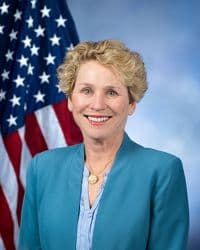
- Introduced
- 4/28/2026
- Last activity
- 4/28/2026 — Referred to the Committee on Energy and Commerce, and in addition to the Committee on Education and Workforce, for a period to be subsequently determined by the Speaker, in each case for consideration of such provisions as fall within the jurisdiction of the committee concerned.
- Sponsored by
- Chrissy Houlahan
- Cosponsors
- - 1 - 2
- Introduced
- In Committee
What this bill would do
The Access to Donor Milk Act of 2026 aims to protect and expand access to pasteurized, donor human milk. It amends the Child Nutrition Act of 1966 to allow State agencies to use funds for collecting, storing, and transferring unprocessed human milk to nonprofit donor human milk banks. The bill authorizes competitive grants for nonprofit donor human milk banks to expand emergency capacity during disasters or public health emergencies. Additionally, it directs the Secretary of Health and Human Services to develop a public awareness campaign regarding the benefits and safety of donor human milk. Finally, the bill mandates the establishment of minimum safety standards for the collection, handling, and processing of donor human milk and its derived products.
Yes· 3 of 6
Would children be better off under this?+6
The bill improves access to nutrition for high-risk infants through donor human milk banks.
Does this make health care easier to get in general?+5
The bill expands access to donor human milk through competitive grants for milk banks and support for state agencies.
Does this make the country readier for the next outbreak?+4
The bill provides funds to expand the capacity of human milk banks during public health emergencies.
The opposite
No question was scored the opposite.
Who it would affect, and how
Potential Positive Impacts for People
-
Increased Access to Milk During Emergencies: The bill allows for competitive grants to expand emergency capacity for human milk banking during major disasters or public health emergencies (Section 4).
-
Support for Families of High-Risk Infants: Funds can be used to raise awareness and provide resources specifically to families of high-risk infants (Section 4, subsection (d)) and through the distribution of educational materials to expectant and new parents (Section 5).
-
Financial Assistance for Milk Bank Operations: Grants can cover various costs such as collection, storage, pasteurization, and transfer fees, as well as increasing staffing and supplies (Section 4, subsection (d)).
-
Improved Information for Healthcare Providers: The public awareness campaign includes distributing educational materials to clinicians, including pediatricians, obstetricians, and lactation consultants (Section 5).
-
Expanded State Support: State agencies may use available funds for the collection, storage, and transfer of human milk to nonprofit donor human milk banks (Section 3).
Potential Negative Impacts for People
- No specific negative impacts or burdens are explicitly stated in the provided text.
Groups and Interests Ranking
Every group the model scored this bill for, from -10 to +10. Hover a score for the reason it gave.
- Demographic And Interest Groups
- Good For Children+6Good For Low Income Households+3Good For Women+3
- Healthcare
- Improves Healthcare Access+5Improves Pandemic Preparedness+4
- Social Issues And Justice
- Improves Poverty Reduction+2
- 6/3/2026
- 1 Cosponsor added.
- 4/28/2026
- Referred to the Committee on Energy and Commerce, and in addition to the Committee on Education and Workforce, for a period to be subsequently determined by the Speaker, in each case for consideration of such provisions as fall within the jurisdiction of the committee concerned.
- 2 Cosponsors added.
- Introduced in House
 Stephanie Bice
Republican · Oklahoma
 Sharice Davids
Democrat · Kansas
 Maria Salazar
Republican · Florida