Bill · H.R. 8542· House(119-HR-8542)
Offshore Parity Act of 2026
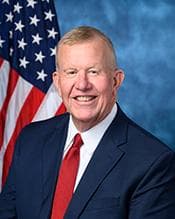
- Introduced
- 4/28/2026
- Last activity
- 6/3/2026 — Subcommittee Hearings Held
- Sponsored by
- Mike Ezell
- Cosponsors
- - 1 - 2
- Introduced
- In Committee
What this bill would do
The Offshore Parity Act of 2026 seeks to amend existing federal laws regarding submerged lands and fisheries. It aims to delegate management authority for expanded submerged lands to the states of Louisiana, Mississippi, and Alabama. This expansion moves the state boundary from 3 geographical miles to 3 marine leagues. Under this plan, the states would oversee oil, gas, and other energy activities within these expanded areas. Additionally, the bill would allow these states to oversee fisheries management within those same boundaries.
Yes· 3 of 5
Does this leave more decisions to the states?+8
The bill delegates management authority for submerged lands and fisheries from the federal government to specific states.
Is this likely to grow the economy?+5
The bill allows states to collect new revenue from rentals and royalties on expanded submerged lands.
Would people in rural areas be better off under this?+4
The expansion of state-managed energy and fishery resources may provide economic benefits to coastal rural communities.
The opposite
Does this reduce how much oil, gas and coal is produced?-1
The bill facilitates state management of oil and gas energy activities in expanded coastal areas.
Who it would affect, and how
Potential Positive Impacts for People
-
State Management of Energy Resources: The bill would allow Louisiana, Mississippi, and Alabama to manage leases, easements, and rights-of-use for energy activities on expanded submerged lands (Section 2 and Section 3(b)).
-
Increased State Revenue: States receiving delegated authority may collect rentals, royalties, and other sums as determined by the State for new leases (Section 3(c)(4)(A)).
-
Improved Fisheries Management: The bill allows the states to oversee fisheries management in the expanded seaward boundaries to improve management (Section 2 and Section 4(a)).
Potential Negative Impacts for People
-
State Financial Liability: A state receiving delegated authority must indemnify the United States for any liability regarding property interests or breach of contract for existing leases (Section 3(c)(6)(A)).
-
Potential Revenue Deductions for States: The Secretary of the Interior may deduct amounts from payments owed to a state to cover final nonappealable judgments resulting from the state's management or breaches of contract (Section 3(c)(6)(B)).
-
State Requirements for Resource Provision: To receive authority, a state must show it will provide adequate resources to carry out its responsibilities (Section 3(b)(1)).
Groups and Interests Ranking
Every group the model scored this bill for, from -10 to +10. Hover a score for the reason it gave.
- Governance And Ideology
- Increase States Rights+8
- Demographic And Interest Groups
- Good For Rural Residents+4Good For Business Owners+3
- Economy And Finance
- Improves Economic Growth+5Improves Small Business Support+1
- Environment Energy And Infrastructure
- Reduces Fossil Fuel Production-1
- 6/3/2026
- Subcommittee Hearings Held
- 5/29/2026
- Referred to the Subcommittee on Water, Wildlife and Fisheries.
- 4/28/2026
- Referred to the House Committee on Natural Resources.
- 3 Cosponsors added.
- Introduced in House
 Troy Carter
Democrat · Louisiana
 Shomari Figures
Democrat · Alabama
 Clay Higgins
Republican · Louisiana