Bill · H.R. 8520· House(119-HR-8520)
HELP Act of 2026
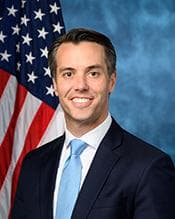
- Introduced
- 4/27/2026
- Last activity
- 4/27/2026 — Referred to the House Committee on Energy and Commerce.
- Sponsored by
- Morgan McGarvey
- Cosponsors
- - 6 - 1
- Introduced
- In Committee
What this bill would do
The HELP Act of 2026 aims to improve the accessibility and coordination of 211 services across the United States. The Secretary of Health and Human Services will establish a program to increase the capacity of 211 services, improve coordination with 911 and 988 providers, and raise public awareness. An administering agency will be selected to manage grants for qualified 211 service entities in each State. These grants will fund the operation of contact centers, database maintenance, and public awareness campaigns. The bill provides for significant funding to ensure individuals can access health and human services information.
Yes· 3 of 12
Would people with disabilities be better off under this?+6
The bill mandates that 211 services must be directly accessible in accordance with the Americans with Disabilities Act.
Does this make health care easier to get in general?+6
The bill expands the capacity of 211 services to provide referrals for health and human services.
Would households on low incomes be better off under this?+5
The bill improves accessibility to essential human services like food assistance and housing through 211.
The opposite
No question was scored the opposite.
Who it would affect, and how
Potential Positive Impacts for People
-
Increased Accessibility to Services: The bill aims to increase the capacity of 211 services to ensure they are directly accessible to all individuals in each State (Section 2(a)(1)).
-
Improved Emergency Coordination: The program seeks to increase coordination between 211, 988, and 911 service providers (Section 2(a)(2)).
-
Enhanced Public Awareness: The act includes a mandate to develop public awareness campaigns to educate the public on the purpose and use of 211 services (Section 3(b)(5)).
-
Equitable Resource Distribution: Grant awards are intended to facilitate equitable geographic distribution to ensure rural communities have access to 211 services (Section 4(c)(2)).
-
Support for Essential Needs: The program supports the provision of information and referrals regarding health and human services, including food assistance, housing supports, and mental health resources (Section 5(5)).
-
Ensuring No-Cost Access: A goal of the program is to ensure that individuals with phone or internet service can connect to 211 services at no charge (Section 3(d)(1)(A)).
Potential Negative Impacts for People
- Requirement for Matching Funds: To receive funding, qualified 211 service entities must provide matching funds from non-Federal sources of at least 25 percent of the amount received (Section 4(c)(3)(B)).
Groups and Interests Ranking
Every group the model scored this bill for, from -10 to +10. Hover a score for the reason it gave.
- Demographic And Interest Groups
- Good For People With Disabilities+6Good For Low Income Households+5Good For Rural Residents+5Good For Veterans+4
- Healthcare
- Improves Healthcare Access+6Improves Mental Health Access+5
- Social Issues And Justice
- Improves Poverty Reduction+4Improves Affordable Housing+3Reduces Homelessness+3
- Environment Energy And Infrastructure
- Improves Disaster Relief And F E M A+5
- National Security And Foreign Policy
- Improves Veterans Benefits+4
- Economy And Finance
- Improves Economic Growth+2
- 4/27/2026
- Referred to the House Committee on Energy and Commerce.
- 7 Cosponsors added.
- Introduced in House
 J. Correa
Democrat · California
 Brian Fitzpatrick
Republican · Pennsylvania
 Maxwell Frost
Democrat · Florida
 Robert Garcia
Democrat · California
 Joseph Morelle
Democrat · New York
 Emilia Sykes
Democrat · Ohio
 Paul Tonko
Democrat · New York