Bill · H.R. 8512· House(119-HR-8512)
To amend the FISA Amendments Act of 2008 to extend the authorities of title VII of the Foreign Intelligence Surveillance Act of 1978 through April 20, 2029, and for other purposes.
- Introduced
- 4/27/2026
- Last activity
- 4/27/2026 — Referred to the Committee on the Judiciary, and in addition to the Committee on Intelligence (Permanent Select), for a period to be subsequently determined by the Speaker, in each case for consideration of such provisions as fall within the jurisdiction of the committee concerned.
- Sponsored by
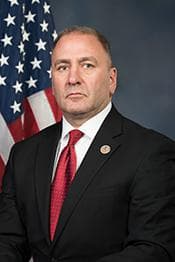
- Clay Higgins
- Cosponsors
- None
- Introduced
- In Committee
What this bill would do
This bill seeks to extend the authorities of title VII of the Foreign Intelligence Surveillance Act of 1978 through April 20, 2029. It introduces a warrant requirement for targeting the communications of United States persons for acquisition. The bill also restricts the FBI from ingesting unminimized information into analytic repositories unless certain conditions are met. Additionally, it establishes new criminal penalties for the unauthorized disclosure or retention of certain classified information and unauthorized queries. Finally, the bill mandates new procedures for Congressional access to certain court proceedings and requires a Government Accountability Office audit of targeting procedures.
Yes· 3 of 6
Does this protect people from being watched or searched?+8
The bill creates a warrant requirement for targeting US persons and restricts the FBI's use of unminimized data.
Does this give people more control over their personal data?+7
The bill introduces warrant requirements for targeting the communications of United States persons.
Does this make what the government does easier for the public to see?+5
The bill mandates new procedures for Congressional access to court proceedings and requires a GAO audit.
The opposite
Does this give the federal government more power?-2
The bill increases Congressional oversight and audit requirements over intelligence agency procedures.
Who it would affect, and how
Potential Positive Impacts for People
-
Increased Protections for United States Persons: The bill prohibits the intentional targeting of a United States person's communications under existing section 702 authorizations, requiring the government to instead seek a warrant or appropriate order based on probable cause (Section 2(b)).
-
Restrictions on FBI Information Use: The Federal Bureau of Investigation is prohibited from ingesting unminimized information into its analytic repositories unless the targeted person is relevant to an existing, open, predicated full national security investigation, and if the subject is a United States person, the investigation must be supported by probable cause (Section 2(a)).
-
Evidentiary Protections: Information acquired about a United States person under section 702 cannot be used as evidence against them in a criminal proceeding if the information was acquired in violation of the new warrant requirements (Section 2(c)).
-
Increased Accountability for Government Officials: The bill establishes criminal penalties, including fines and imprisonment, for officials who willfully engage in unauthorized disclosure or retention of certain communications, conduct unauthorized queries, or falsify records regarding compliance (Section 3).
-
Congressional Oversight: The Attorney General is required to issue new procedures to ensure Members of Congress and specified staff have access to proceedings of the Foreign Intelligence Surveillance Court and the Foreign Intelligence Surveillance Court of Review (Section 4).
-
Audit of Government Procedures: The Comptroller General is directed to conduct an audit of targeting procedures, including technical mechanisms and operations, to analyze if they appropriately limit targeting to non-United States persons located outside the United States (Section 6).
Potential Negative Impacts for People
- Criminal Penalties for Government Employees: Officials may face fines and imprisonment of up to 8 years for unauthorized disclosure or retention of classified information involving a known United States person, or up to 2 years for unauthorized queries or falsifying compliance records (Section 3).
Groups and Interests Ranking
Every group the model scored this bill for, from -10 to +10. Hover a score for the reason it gave.
- Governance And Ideology
- Improves Privacy Rights+8Improves Government Transparency+5Increases Federal Power-2
- Education And Technology
- Improves Data Privacy+7
- Social Issues And Justice
- Improves Policing Reform+5Improves Voting Rights+1
- National Security And Foreign Policy
- Improves Cybersecurity Defense+2
- 4/27/2026
- Referred to the Committee on the Judiciary, and in addition to the Committee on Intelligence (Permanent Select), for a period to be subsequently determined by the Speaker, in each case for consideration of such provisions as fall within the jurisdiction of the committee concerned.
- Introduced in House
2 bills Congress.gov lists as related to this one — companions in the other chamber, earlier versions, and bills this one absorbed or was folded into.
- 119-HR-9115: To amend the FISA Amendments Act of 2008 to extend the authorities of title VII of the Foreign Intelligence Surveillance Act of 1978, and for other purposes.
- 119-S-4465: A bill to amend the FISA Amendments Act of 2008 to extend the authorities of title VII of the Foreign Intelligence Surveillance Act of 1978, and for other purposes.