Bill · H.R. 8506· House(119-HR-8506)
SAFE School Act
- Introduced
- 4/27/2026
- Last activity
- 4/27/2026 — Referred to the Committee on Education and Workforce, and in addition to the Committee on the Judiciary, for a period to be subsequently determined by the Speaker, in each case for consideration of such provisions as fall within the jurisdiction of the committee concerned.
- Sponsored by
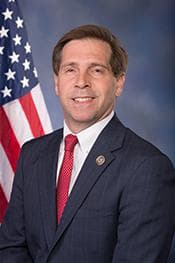
- Charles Fleischmann
- Cosponsors
- None
- Introduced
- In Committee
What this bill would do
The SAFE School Act aims to establish a grant program to improve school security. The Attorney General will manage this program through the Office of Justice Programs. Grants will be provided to States and local educational agencies for various eligible activities. These activities include training and hiring veterans or former law enforcement officers as school safety officers. Additionally, the bill allows for security improvements through infrastructure and technology. The act authorizes up to $900,000,000 for these purposes.
Yes· 3 of 7
Would veterans be better off under this, taking everything together?+6
The bill facilitates employment for veterans through specialized training and school safety officer roles.
Does this put more money into public schools?+6
The bill provides up to $900,000,000 in grants to assist schools with security infrastructure and personnel.
Would children be better off under this?+5
The bill aims to enhance the safety and security of elementary and secondary school students.
The opposite· 3 of 5
Does this get reliable internet to more people?-1
The bill does not address internet access despite mentioning security technology.
Does this reduce what the federal government spends?-1
The bill authorizes $900,000,000 in new federal spending for school security grants.
Does this repair or build roads and bridges?-1
The bill focuses on school infrastructure rather than roads and bridges.
Who it would affect, and how
Potential Positive Impacts for People
-
Employment opportunities for specific groups: The bill allows for the training and hiring of veterans and former law enforcement officers to serve as school safety officers (Sec. 2(c)(1) and Sec. 2(c)(2)).
-
Enhanced school security infrastructure: Schools can improve safety by installing various physical security measures such as metal detectors, x-ray machines, fencing, and surveillance cameras (Sec. 2(c)(3)(A)).
-
Improved door and entrance security: The bill provides for securing school doors through the use of passcodes, internal locks, peepholes, and automatic locking mechanisms (Sec. 2(c)(3)(B)).
-
Protection against forced entry: Security can be improved by installing bullet resistant or forced entry resistant glass in a building's exterior (Sec. 2(c)(3)(C) and Sec. 2(c)(3)(D)).
-
Increased emergency responsiveness: Schools can enhance their ability to respond to emergencies by installing increased lighting, emergency call boxes, emergency alerts, and emergency generators (Sec. 2(c)(3)(E)).
-
Inclusion of various school types: Grants can be awarded regardless of whether a school is public, private, or religiously affiliated (Sec. 2(e)).
Potential Negative Impacts for People
- No specific negative impacts are explicitly listed in the text of the bill.
Groups and Interests Ranking
Every group the model scored this bill for, from -10 to +10. Hover a score for the reason it gave.
- Demographic And Interest Groups
- Good For Veterans+6Good For Children+5Good For Students+5Good For Low Income Households+1
- Education And Technology
- Increases Public School Funding+6Improves Internet Access-1
- Economy And Finance
- Increases Job Creation+5Reduces Government Spending-1
- National Security And Foreign Policy
- Improves Veterans Benefits+4
- Environment Energy And Infrastructure
- Improves Roads And Bridges-1
- Governance And Ideology
- Improves Government Transparency-1
- Social Issues And Justice
- Improves Childcare Affordability-1
- 4/27/2026
- Referred to the Committee on Education and Workforce, and in addition to the Committee on the Judiciary, for a period to be subsequently determined by the Speaker, in each case for consideration of such provisions as fall within the jurisdiction of the committee concerned.
- Introduced in House