Bill · H.R. 8492· House(119-HR-8492)
Public Safety UAS Readiness Act
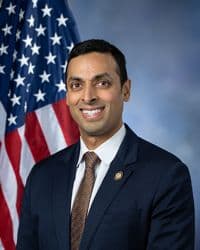
- Introduced
- 4/23/2026
- Last activity
- 4/23/2026 — Referred to the House Committee on Transportation and Infrastructure.
- Sponsored by
- Suhas Subramanyam
- Cosponsors
- - 0 - 2
- Introduced
- In Committee
What this bill would do
The Public Safety UAS Readiness Act directs the Secretary of Transportation to create a grant program for unmanned aircraft system pilot training. This program is administered through the Federal Aviation Administration and targets covered entities like fire departments, law enforcement, and EMS. Grants can be used for training personnel, developing curriculum, and purchasing necessary equipment. To receive funding, entities must provide a comprehensive plan covering oversight, safety, and legal compliance. The Secretary is instructed to prioritize entities involved in high-risk operations or those in underserved regions. The act authorizes $10,000,000 for each fiscal year from 2026 through 2029.
Yes· 3 of 9
Is this likely to create jobs?+3
The bill funds training for instructors and specialized personnel in public safety roles.
Would people in rural areas be better off under this?+2
The bill prioritizes underserved regions which often include rural communities.
Does this invest in rural communities?+2
The Secretary is directed to prioritize entities operating in underserved regions, which often include rural areas.
The opposite
Does this reduce what the federal government spends?-2
The bill authorizes $10,000,000 in annual spending for the grant program.
Who it would affect, and how
Potential Positive Impacts for People
-
Enhanced Training for Public Safety Personnel: The bill allows for the training of personnel on aviation safety, Federal Aviation Administration regulations, and mission profiles, which can improve response capabilities (Section 2(b)(1)(A)).
-
Specialized Skill Development: Certified remote pilots can receive instruction on risk management, flight execution, and data collection (Section 2(b)(1)(B)), as well as specialized instruction for complex, multi-agency environments (Section 2(b)(1)(C)).
-
Creation of Expert Instructors: The program supports the development and validation of public safety UAS instructors to serve in various regions across the country (Section 2(b)(1)(D)).
-
Support for Underserved and High-Risk Areas: The Secretary is directed to prioritize entities that engage in high-risk operations or operate in underserved regions (Section 2(e)(1)).
-
Resource Availability: Grants can be used to purchase unmanned aircraft systems that meet Federal safety standards for training purposes (Section 2(b)(2)).
Potential Negative Impacts for People
-
Administrative Burdens on Recipients: To be eligible, entities must submit a comprehensive plan that includes detailed information on administration, risk management, airspace coordination, personnel rosters, maintenance, data protection, and legal compliance (Section 2(c)).
-
Ongoing Reporting Requirements: Grant recipients are required to submit reports to the Secretary at least annually, which must include specific data regarding personnel trained, instructors, and system deployments (Section 2(f)(1)).
-
Strict Curriculum Constraints: Any training program established must have a curriculum maintained or licensed through a national nonprofit organization, and any changes to that curriculum must be approved by said organization (Section 2(d)(2)).
Groups and Interests Ranking
Every group the model scored this bill for, from -10 to +10. Hover a score for the reason it gave.
- Demographic And Interest Groups
- Good For Rural Residents+2Good For Low Income Households+1Good For Urban Residents+1
- Environment Energy And Infrastructure
- Improves Rural Development+2
- Healthcare
- Improves Healthcare Access+2
- Social Issues And Justice
- Improves Policing Reform+2
- Economy And Finance
- Increases Job Creation+3Reduces Government Spending-2
- Education And Technology
- Increases Scientific Research Funding+1
- Governance And Ideology
- Improves Government Transparency+1
- 7/15/2026
- 1 Cosponsor added.
- 4/23/2026
- Referred to the House Committee on Transportation and Infrastructure.
- 1 Cosponsor added.
- Introduced in House
 Robert Bresnahan
Republican · Pennsylvania
 Jefferson Van Drew
Republican · New Jersey