Bill · H.R. 8489· House(119-HR-8489)
HUD Payment Integrity and Accountability Act of 2026
- Introduced
- 4/23/2026
- Last activity
- 4/23/2026 — Referred to the House Committee on Financial Services.
- Sponsored by
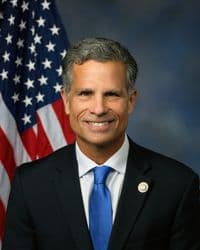
- Daniel Meuser
- Cosponsors
- None
- Introduced
- In Committee
What this bill would do
The HUD Payment Integrity and Accountability Act of 2026 requires the Secretary of Housing and Urban Development to perform an improper payment assessment for project-based and tenant-based assistance. This assessment must be included in the agency's fiscal year 2027 financial report. The Secretary is also tasked with creating a detailed plan and timeline for testing these estimates. Additionally, the bill establishes a process for identifying potential fraud when housing assistance or the number of recipients increases by more than 100 percent in a specific area. The Inspector General is required to conduct audits to ensure compliance and detect fraudulent activity. Finally, the Inspector General must submit a fraud risk assessment regarding annual rental assistance expenditures.
Yes· 3 of 6
Does this make the government pay for what it commits to?+4
The mandate for improper payment assessments and fraud risk evaluations improves the oversight of massive annual rental assistance expenditures.
Does this reduce what the federal government spends?+3
The bill aims to reduce government waste by requiring assessments of improper payments and auditing for fraud in rental assistance programs.
Does this make what the government does easier for the public to see?+3
The bill requires the Secretary to report on improper payment assessments and mandates the Inspector General to submit fraud risk assessments to Congress.
The opposite
No question was scored the opposite.
Who it would affect, and how
Potential Positive Impacts for People
-
Improved Accountability for Housing Funds: The bill requires the Secretary to conduct an improper payment assessment for project-based and tenant-based assistance (Section 3), which aims to ensure rental assistance is being handled correctly.
-
Detection of Fraudulent Activity: The Inspector General is mandated to audit specific programs, agencies, or recipients to detect potential fraud, especially where there has been a significant increase in payments or participants (Section 4(c)).
-
Identification of High-Risk Areas: The Inspector General must conduct a fraud risk assessment to identify high-risk nodes in the $50,000,000,000 spent annually on rental assistance (Section 5(b)(1)).
-
Verification of Payment Accuracy: The Inspector General is tasked with executing a data draw to reconcile payments at the eligibility tier to ensure accuracy (Section 5(b)(2)(A)).
Potential Negative Impacts for People
- No specific negative impacts or burdens for individuals or groups are explicitly stated in the provided text.
Groups and Interests Ranking
Every group the model scored this bill for, from -10 to +10. Hover a score for the reason it gave.
- Economy And Finance
- Improves Fiscal Responsibility+4Reduces Government Spending+3
- Governance And Ideology
- Improves Government Transparency+3
- Social Issues And Justice
- Improves Affordable Housing+2Improves Poverty Reduction+1
- Demographic And Interest Groups
- Good For Low Income Households+2
- 4/23/2026
- Referred to the House Committee on Financial Services.
- Introduced in House