Bill · H.R. 8463· House(119-HR-8463)
Pre-Payment Fraud Prevention and Treasury Data Access Act
- Introduced
- 4/23/2026
- Last activity
- 6/9/2026 — Received in the Senate.
- Sponsored by
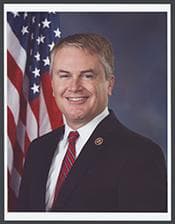
- James Comer
- Cosponsors
- - 2 - 1
- Introduced
- Passed House
- Awaiting Senate
What this bill would do
This bill establishes governmentwide rules to stop fraud and improper payments before federal money is actually sent out. It requires federal agencies and the U.S. Treasury to verify payment details, bank accounts, and payee eligibility ahead of time. The legislation expands the use of the Treasury's Do Not Pay system across federal, state, and local governments to screen for fraud. It also mandates that first-time recipients of federal awards worth $50,000 or more submit a one-time report detailing how they use the funds. Finally, the bill sets penalties for unlawfully disclosing data and outlines regular reporting requirements to Congress.
Yes· 3 of 5
Does this reduce what the federal government spends?+5
The bill aims to reduce financial loss to the government by preventing improper payments and fraud through stricter pre-payment verification.
Does this make what the government does easier for the public to see?+4
The bill requires quarterly reports to Congress on the effectiveness of the Do Not Pay system and mandates public notice for data asset designations.
Would households on low incomes be better off under this?+2
Preventing fraud ensures that social safety net funds reach intended low-income recipients without diversion.
The opposite
No question was scored the opposite.
Who it would affect, and how
Potential Positive Impacts for People
-
Better Protection Against Taxpayer Waste: By requiring agencies to check recipient details, active bank accounts, and deceased lists before sending money, the bill helps ensure that hard-earned taxpayer dollars do not get lost to fraud or mistakes, as outlined in Section 2.
-
Stronger Access to Anti-Fraud Tools: State and local governments that administer federally funded programs will be given direct access to the Treasury's Do Not Pay system to help them catch improper payments and prevent fraud locally, according to Section 3.
-
Clear Reporting Rules for New Funding: First-time recipients of federal awards of $50,000 or more must submit a straightforward report on how they use the money, which helps officials verify that funds are going to their intended purpose as required by Section 4.
Potential Negative Impacts for People
-
Stricter Reporting Burdens for Recipients: Entities receiving federal awards for the first time must file an extra post-award report within 180 days, which adds administrative work and paperwork to those participating in federal programs under Section 4.
-
Temporary Stoppage of Funds for Noncompliance: If a recipient fails to submit their required first-time use report, the awarding agency is legally required to halt any further disbursements of funds for that program until the report is successfully submitted, as detailed in Section 4.
Groups and Interests Ranking
Every group the model scored this bill for, from -10 to +10. Hover a score for the reason it gave.
- Economy And Finance
- Reduces Government Spending+5
- Governance And Ideology
- Improves Government Transparency+4
- Demographic And Interest Groups
- Good For Low Income Households+2Good For Urban Residents+1
- Social Issues And Justice
- Improves Poverty Reduction+1
- 6/9/2026
- Received in the Senate.
- 6/8/2026
- Reported (Amended) by the Committee on Oversight and Government Reform. H. Rept. 119-688, Part I.
- Committee on Ways and Means discharged.
- Placed on the Union Calendar, Calendar No. 600.
- Motion to reconsider laid on the table Agreed to without objection.
- Passed/agreed to in House: On motion to suspend the rules and pass the bill, as amended Agreed to by voice vote. (text: CR H3919-3922)
- On motion to suspend the rules and pass the bill, as amended Agreed to by voice vote. (text: CR H3919-3922)
- DEBATE - The House proceeded with forty minutes of debate on H.R. 8463.
- Considered under suspension of the rules. (consideration: CR H3919-3923)
- Mr. Gill (TX) moved to suspend the rules and pass the bill, as amended.
- 6/3/2026
- 2 Cosponsors added.
- 4/29/2026
- Committee Consideration and Mark-up Session Held
- Ordered to be Reported (Amended) by the Yeas and Nays: 35 - 1.
- 4/23/2026
- Referred to the Committee on Oversight and Government Reform, and in addition to the Committee on Ways and Means, for a period to be subsequently determined by the Speaker, in each case for consideration of such provisions as fall within the jurisdiction of the committee concerned.
- 1 Cosponsor added.
- Introduced in House
 Jodey Arrington
Republican · Texas
 Ken Calvert
Republican · California
 Robert Garcia
Democrat · California