Bill · H.R. 8452· House(119-HR-8452)
Restoring Law and Order on America’s Streets Act
- Introduced
- 4/22/2026
- Last activity
- 4/22/2026 — Referred to the House Committee on the Judiciary.
- Sponsored by
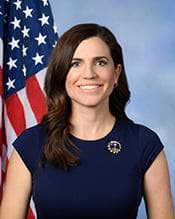
- Nancy Mace
- Cosponsors
- - 1 - 0
- Introduced
- In Committee
What this bill would do
This bill, known as the "Restoring Law and Order on America's Streets Act," aims to amend title 18 of the United States Code. It seeks to provide for the civil commitment of individuals deemed to be a danger to public safety. The legislation expands existing definitions regarding sexually dangerous persons to include those who are a danger to the public. It specifically addresses individuals who may engage in crimes of violence, burglary, robbery, larceny, or drug-related offenses. Additionally, it targets urban camping and urban squatting as qualifying behaviors. The bill also mandates specific evaluations for individuals who were homeless prior to entering federal custody or having criminal charges dismissed.
Yes
Would people in cities be better off under this?+2
The bill aims to reduce crimes of violence and vandalism associated with urban camping and squatting.
The opposite· 3 of 7
Is this likely to reduce homelessness?-6
The bill targets behaviors like urban camping and squatting, which could lead to the civil commitment of homeless individuals rather than housing them.
Would households on low incomes be better off under this?-6
The bill specifically targets urban camping and squatting, behaviors often associated with low-income or unhoused populations.
Does this make housing cost less?-5
The bill targets urban squatting, which may negatively impact those seeking unconventional housing solutions.
Who it would affect, and how
Potential Positive Impacts for People
-
Civil Commitment of Dangerous Individuals: The bill provides for the civil commitment of persons who are a danger to public safety (Section 2(a)). This is intended to address persons who have engaged in or attempted crimes such as violence, burglary, robbery, larceny, or the distribution of controlled substances (Section 2(b)(1)(A)).
-
Mandatory Evaluations for Specific Populations: The Attorney General or the Director of the Bureau of Prisons must evaluate individuals who were homeless immediately before entering custody or before criminal charges were dismissed due to mental conditions (Section 2(a)(4)). This evaluation determines if they should be certified as a sexually dangerous person or a person who is a danger to public safety.
Potential Negative Impacts for People
-
Targeting of Homeless Individuals: The bill includes "urban camping" and "urban squatting" as actions that define a person as a danger to public safety (Section 2(b)(1)(7)). This includes using temporary outdoor shelters like tents or vehicles for sleeping for more than 24 hours on property not designated for recreation (Section 2(b)(1)(9)), or occupying vacant buildings without authorization (Section 2(b)(1)(10)).
-
Expanded Criteria for Civil Commitment: The bill expands the scope of civil commitment to include anyone suffering from a serious mental illness, abnormality, or disorder that makes it difficult for them to refrain from specific acts like urban camping, urban squatting, or vandalism (Section 2(b)(1)(8)).
Groups and Interests Ranking
Every group the model scored this bill for, from -10 to +10. Hover a score for the reason it gave.
- Social Issues And Justice
- Reduces Homelessness-6Improves Affordable Housing-5Improves Poverty Reduction-4Improves Policing Reform-3
- Governance And Ideology
- Improves Privacy Rights-5
- Demographic And Interest Groups
- Good For Urban Residents+2Good For Low Income Households-6
- Healthcare
- Improves Mental Health Access-4
- 4/22/2026
- Referred to the House Committee on the Judiciary.
- 1 Cosponsor added.
- Introduced in House
 Tim Burchett
Republican · Tennessee