Bill · H.R. 8438· House(119-HR-8438)
Wildlife Corridors and Habitat Connectivity Conservation Act of 2026
- Introduced
- 4/22/2026
- Last activity
- 4/22/2026 — Referred to the Committee on Natural Resources, and in addition to the Committees on Agriculture, Transportation and Infrastructure, and Armed Services, for a period to be subsequently determined by the Speaker, in each case for consideration of such provisions as fall within the jurisdiction of the committee concerned.
- Sponsored by
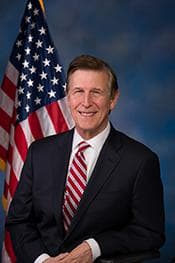
- Donald Beyer
- Cosponsors
- - 7 - 2
- Introduced
- In Committee
What this bill would do
This bill, known as the Wildlife Corridors and Habitat Connectivity Conservation Act of 2026, aims to protect and restore natural habitats so native fish, plants, and wildlife can move safely across land and water. It sets up a scientific mapping program run by the U.S. Geological Survey to track wildlife movement and identify habitat gaps. The legislation establishes a National Wildlife Corridor System on federal lands and waters through statutes, rules, or land management plans. It creates a Coordinating Committee and allows state, tribal, and local governments, along with public groups, to nominate federal areas as wildlife corridors. Additionally, the bill sets up a grant program funded at $75,000,000 annually to support voluntary conservation projects on non-federal lands and waters.
Yes· 3 of 7
Does this better protect air, water and wildlife?+8
The bill establishes a National Wildlife Corridors System to protect habitat connectivity and biodiversity.
Does this put more money into scientific research?+5
The bill authorizes $5,000,000 annually for a habitat connectivity mapping and science program.
Does this give the federal government more power?+5
The bill grants Federal agencies significant authority to designate and manage National Wildlife Corridors.
The opposite· 3 of 6
Would business owners be better off under this?-4
The bill prohibits certain types of development and mineral leasing in designated corridors.
Does this make it easier to run a small business?-3
The bill prohibits human infrastructure and development within designated National Wildlife Corridors.
Would farmers be better off under this?-2
The bill restricts certain human activities and land entries that could affect agricultural land use near corridors.
Who it would affect, and how
Potential Positive Impacts for People
-
Support for Voluntary Private Landowners and Local Groups: Section 301 establishes a wildlife movement grant program that provides annual grants to voluntary private landowners, agricultural cooperatives, local governments, and Indian Tribes to increase habitat connectivity. This benefits local communities by providing financial support for local conservation and restoration work.
-
Improved Public Safety on Roads: Section 203(g) requires federal officials to consult with state, tribal, and local transportation agencies to implement voluntary environmental mitigation measures. This provision aims to improve public safety and reduce vehicle-caused wildlife crashes through the construction of underpasses, overpasses, and fencing.
-
Respect for Private Property Rights: Section 260(b) explicitly protects citizens by including a savings clause stating that nothing in the title authorizes the seizure of private property through eminent domain or the imposition of restrictions on the use of private land without the landowner's consent.
Potential Negative Impacts for People
-
Restrictions on Land Use and Development: Section 203(a)(2) prohibits human infrastructure, development, and activities that impede wildlife movement within National Wildlife Corridors, except where required to meet the minimum requirements of the Act. This could limit certain public or economic uses on designated federal lands and waters.
-
Withdrawal of Public Lands from Mining and Leasing: Section 203(e) dictates that all federal lands and interests within a designated National Wildlife Corridor are withdrawn from all forms of entry, appropriation, and disposal under public land laws, location and patent under mining laws, and the operation of mineral, mineral materials, and geothermal leasing laws. This may negatively impact industries and individuals who rely on access to these federal lands for mining and energy development.
Groups and Interests Ranking
Every group the model scored this bill for, from -10 to +10. Hover a score for the reason it gave.
- Environment Energy And Infrastructure
- Improves Environmental Protections+8Improves Roads And Bridges+3Improves Rural Development+2
- Education And Technology
- Increases Scientific Research Funding+5
- Governance And Ideology
- Increases Federal Power+5
- Economy And Finance
- Improves Small Business Support-3
- Demographic And Interest Groups
- Good For Native Americans+5Good For Rural Residents+3Good For Business Owners-4Good For Farmers-2Good For Low Income Households-1
- National Security And Foreign Policy
- Improves Veterans Benefits-1
- Social Issues And Justice
- Improves Affordable Housing-1
- 9/24/2026
- 2 Cosponsors added.
- 9/3/2026
- 1 Cosponsor added.
- 8/31/2026
- 1 Cosponsor added.
- 8/6/2026
- 1 Cosponsor added.
- 6/2/2026
- 1 Cosponsor added.
- 4/22/2026
- Referred to the Committee on Natural Resources, and in addition to the Committees on Agriculture, Transportation and Infrastructure, and Armed Services, for a period to be subsequently determined by the Speaker, in each case for consideration of such provisions as fall within the jurisdiction of the committee concerned.
- 3 Cosponsors added.
- Introduced in House
 Vern Buchanan
Republican · Florida
 Julia Brownley
Democrat · California
 Brian Fitzpatrick
Republican · Pennsylvania
 Laura Friedman
Democrat · California
 Timothy Kennedy
Democrat · New York
 Zoe Lofgren
Democrat · California
 Kevin Mullin
Democrat · California
 Frank Pallone
Democrat · New Jersey
 Mike Thompson
Democrat · California